Original Scientific Paper
UDC: 338.48 6:7/8(497.11)
004.738.5:316.472.4
DOI: 10.5937/menhottur2600001D
The influence of the social network Instagram on tourist destination choice: Behavior of generations Y and Z
Mihajlo Đurović1, Tanja Vujović2, Goran Perić1,3[*], Cesim Behremen4
1 Toplica Academy of Applied Studies, Department of Business Studies Blace, Serbia
2 University of Priština in Kosovska Mitrovica, Faculty of Economics, Kosovska Mitrovica, Serbia
3 University Bijeljina, Faculty of Agriculture, Bijeljina, Republic of Srpska, Bosnia and Herzegovina
4 Bitlis Eren University, Kanık School of Applied Sciences, Bitlis, Turkey
Abstract
Purpose – The objective of this study was to analyze the effect of various determinants included in the UTAUT2 model, with the addition of the construct of perceived trust, on the intention and actual behavior of Instagram users when choosing a tourist destination, with special reference to the behavior of two generational cohorts. Methodology – The study was conducted through an online survey on a sample of 531 respondents from Serbia. The questionnaire is constructed on validated scales and modified to the framework of using Instagram when choosing a tourist destination. Data analysis was performed in the programming language R, using the Pslpm package. Results – Across the entire sample, habit, hedonic motivation, social influence, and perceived trust impact behavioral intention, while habit, trust, and behavioral intention predict actual behavior. However, the findings showed that generational affiliation moderates the affiliation among enabling circumstances and authentic performance, with the consequence being positive and significant for Generation Z, but not for Generation Y. Implications – Theoretically, the discoveries confirm the status of integrating perceived trust into the UTAUT2 model and indicate a reduced role of technical factors in digitally literate populations. Practically, it is recommended to use formats and functionality of Instagram that are closer to younger users.
Keywords: Instagram, tourist destination choice, UTAUT2 model, perceived trust, Generation Y, Generation Z
JEL classification: M31, L83, D91, O33
Uticaj društvene mreže Instagram na odabir turističke destinacije: Ponašanje generacije Y i Z
Sažetak
Svrha – Cilj istraživanja je bio da se ispita uticaj različitih faktora UTAUT2 modela, uz dodatak konstrukta percipiranog poverenja, na nameru i stvarno ponašanje korisnika Instagrama pri izboru turističke destinacije, sa posebnim osvrtom na ponašanje dve generacijske kohorte. Metodologija – Istraživanje je sprovedeno putem onlajn ankete na uzorku od 531 ispitanika iz Srbije. Upitnik je zasnovan na validiranim skalama i prilagođen kontekstu korišćenja Instagrama pri izboru turističke destinacije. Analiza podataka je sprovedena u programskom jeziku R, korišćenjem paketa pslpm. Rezultati – U celokupnom uzorku, navika, hedonistička motivacija, društveni uticaj i percipirano poverenje značajno utiču na nameru ponašanja, dok navika, poverenje i namera ponašanja predviđaju stvarno ponašanje. Međutim, nalazi su pokazali da generacijska pripadnost moderira vezu između olakšavajućih uslova i stvarnog ponašanja, pri čemu je efekat pozitivan i značajan kod Generacije Z, ali ne i kod Generacije Y. Implikacije – Teorijski, nalazi potvrđuju važnost integracije percipiranog poverenja u UTAUT2 model i ukazuju na smanjenu ulogu tehničkih faktora u digitalno pismenim populacijama. Praktično, preporučuje se korišćenje formata i funkcionalnosti Instagrama koje su bliže mlađim korisnicima.
Klјučne reči: Instagram, izbor turističke destinacije, UTAUT2 model, percipirano poverenje, generacija Y, generacija Z
JEL klasifikacija: M31, L83, D91, O33
1. Introduction
One of the key decisions that potential travelers make is the choice of destination. Since this process is complex, it is influenced by a whole range of factors (Dwityas & Briandana, 2017). In order to make an optimal decision, tourists evaluate tourist destinations in accordance with their own motives and purpose of travel (Gardiner et al., 2013). During this process, the information that enables the elimination of destinations that are not in line with personal preferences and travel goals, while at the same time facilitating the identification of destinations that best suit individual needs, plays a decisive part (Wang & Yan, 2022). During the last decade of the 21st century, social networks have become a central channel for informing, inspiring and shaping the preferences of modern tourists, especially among members of younger generations (Alkier & Perić, 2021; Đuričanin et al., 2021; Dramićanin & Sančanin, 2020; Jevtović, 2019; Stanišić et al., 2024; Wang & Park, 2023). Among them, the Instagram platform stands out as one of the most significant when it comes to creating inspiration and stimulating interest in specific destinations (Tešin et al., 2022).
Despite TikTok’s rapid growth in the past few years, Instagram remains one of the leading social media platforms in Serbia, highlighting its continued relevance for studying tourist behavior. DataReportal platform (2025) reports that Instagram is used by 46.9% of the worldwide population, and the platform recorded a growth of additional 100,000 users (+3.3%) between October 2024 and January 2025. In the Serbian context, the Social Serbia 2025 report (Pioniri Communications, 2025) indicates that Instagram continues to attract 85% of active social media users, even as TikTok is increasingly incorporated into frameworks examining tourist behavior, most often concentrating on Gen Z (Băltescu & Untaru, 2025; Dramićanin et al., 2023; Tseng et al., 2024; Zhou et al., 2023). The dominance of Instagram in Serbia points to an overlooked area of inquiry. The discrepancy marks a notable gap in the literature. This gap marks the need for broader examinations of Instagram as a relevant channel shaping tourist motivations and information-seeking behavior, principally between Gen Y and Gen Z cohorts.
Thanks to its visual nature, user-generated content and developed practice of influencer marketing, Instagram significantly influences the perception of destinations, inspires potential travelers and facilitates the process of making travel decisions (Platon, 2023). Although the interest of the academic community, both national and international, in this topic is continuously growing, most of the research so far has focused mainly on examining the intent to custom social networks, while the authentic behavior of users has rarely been the subject of analysis.
As one of the most commonly utilized theoretical frameworks, the UTAUT2 (Unified Theory of Acceptance and Use of Technology 2) model serves to analyze the processes of knowledge acquisition (Venkatesh et al., 2003; 2012). However, in the context of the Instagram social network in tourism, there is a need for its theoretical expansion. Additionally, in this research, the model was expanded by presenting the construct of perceived trust, which has been shown to be relevant for understanding user behavior in the digital environment (Sharma et al., 2023; Zhou et al., 2023), behavioral intention, its direct effect on actual behavior is considered. The focus is on examining how various factors of the UTAUT2 model, with the construct of perceived trust, influence intention, actual behavior, with special reference to possible differences between these generations in terms of their behavior. Previous research indicates that Instagram significantly shapes the perception of destinations through visual content, which can have an impact on the motivation and decisions of tourists (Eman & Radaie, 2025; Hauser et al., 2022; Kim et al., 2010). However, a lack of comprehensive analyses of the precise features that encourage the use of Instagram, especially among the younger generations (Generations Y and Z), has been observed. The research tested a series of hypotheses examining the relationships between determinants: expected performance, expected effort, social influence, facilitating conditions, hedonic motivation, habit, perceived trust, behavioral intention, and actual behavior, with a precise attention on the moderating part of belonging to Generations Y and Z. The outcomes of this study contribute to theory by expanding prevailing models of knowledge acceptance in tourism, by providing empirical understandings in the moderating role of generational affiliation in terms of intention and actual behavior. Departing from Zhou et al. (2023), who tested their model on TikTok within the Chinese context, the present study employs the same theoretical framework, but redirects its application to Instagram users in Serbia by situating the model in a distinct technological and sociocultural environment. The paper contributes to the literature by representing how the model works within the Instagram context and between users from Gen Y and Gen Z in this particular sociocultural background.
2. Literature review and hypothesis development
Generations Y and Z represent the most active part of the population when it comes to using modern digital technologies, and accordingly use Instagram as a primary source of data when making choices about destinations (ELTayleb et al., 2021; Gulati, 2024; Șchiopu et al., 2023). Gen Y and Gen Z are two fundamentally important consumer groups. Gen Z encompasses around 32% of the global population, about 2.47 billion persons, and has become the dominant generational cohort (Harari et al., 2022). Gen Y includes around 1.8 billion individuals, accounting 23% of the global population (Mude & Undale, 2023). These numbers highpoint the demographic and market value of these generations, mostly in studies examining their social media behavior. Understanding how different factors influence the intention of generations Y and Z, as well as their actual behavior when choosing a destination with the use of Instagram, is a significant step in creating effective content in the tourism industry (Nur’afifah & Prihantoro, 2021; Salah et al., 2025). Considering the aforementioned trends, this research was designed based on the following research variables: expected performance, expected effort, social influence, facilitating conditions, hedonic motivation, habit, perceived trust, behavioral intention and actual behavior.
Expected performance plays a significant role in travel decision-making, especially when potential travelers base their choices on the use of technology, such as social networks, travel applications, hotel and travel agency websites (Almunawar et al., 2022; Mishra et al., 2023; Sharma et al., 2023; Vidal-Silva et al., 2024). Expected performance is the gradation of tourist trusts that using a certain technology contribute to achieving better results (Sharma et al., 2023). This concept most often includes saving time and money when choosing a trip, finding more favourable offers and reducing stress (Vidal-Silva et al., 2024). Expected performance is also a measure of the benefits that social networks provide to potential travelers when selecting a destination (Mishra et al., 2023). They are a key factor in research dealing with intentions to book tourist destinations via the Internet (Octaviani et al., 2023). Previous research indicates a confident effect of expected performance on the intention of tourists to use social networks in the process of choosing tourist destinations (Oncioiu & Priescu, 2022; Sharma et al., 2023; Syakier & Hanafiag, 2022; Yuliantie, 2024). Based on the above, the following proposition was formulated:
H1: Expected performance positively influences tourists’ behavioral intention to use Instagram when choosing a tourist destination.
Expected effort relates to different socioeconomic status when using technology (Foroughi et al., 2025). In the context of tourist trips, the expected effort, that is, the effort invested, affects the willingness of travelers to adopt technological tools during the planning and implementation of their trip (Ho et al., 2021). Expected effort represents the degree of ease and effort required to use social networks by potential tourists (Mishra et al., 2023). Travelers prefer technology that is understandable, simple and efficient to use (Godoe & Johansen, 2012). Modern travelers use social networks and applications if they believe that these tools are useful and easily accessible (Sharma et al., 2023). Previous research shows that expected effort significantly influences tourists’ behavioural intention to use social networks when choosing tourist destinations (Al Rousan et al., 2024; Oncioiu & Priescu, 2022). Based on the above, the following proposition was formulated:
H2: Expected effort has a positive effect on tourists’ behavioural intention to use Instagram when choosing a tourist destination.
Modern travelers today are strongly influenced by family and friends when it comes to choosing tourist destinations (Lejealle et al., 2021). Social networking platforms: Instagram, Facebook, Tok Tok, YouTube further amplify this impact, turning travel into a socially driven activity (Boto-García & Baños-Pino, 2022). Social impact denotes the gradation to potential tourist observes that substantial people from his environment, such as family, friends, work colleagues, but also the wider community, expect them to use social media when making decisions (Dai et al., 2022; Pop et al., 2022). Social influence significantly shapes decisions about choosing a tourist destination, especially through social media that provide user-generated content and facilitate the collection and comparison of information about destinations (Dramićanin et al., 2023). Based on that, the following proposition was formulated:
H3: Social influence has a positive effect on tourists’ behavioural intention to use Instagram when choosing a tourist destination.
The concept of facilitating conditions reflects the extent to which individuals consider that adequate organizational and technical infrastructure exists to support the adoption of a given technology (Venkatesh et al., 2003). These circumstances include available resources, technical support, and infrastructure that help users use technology in a simple and effective way, facilitating decision-making (Sudarman & Sabaruddin, 2024). Facilitating conditions include access to reliable Internet, availability of customer support, existence of digital tools, as well as infrastructure at the destination itself (Zhang et al., 2019). When it comes to using Instagram, facilitating conditions reduce barriers, increase comfort of use, facilitate the use of digital tools, and provide support to travelers in selecting a travel destination (Atasoy & Türkay, 2024; Kilipiri et al., 2023; Zhou & Xue, 2022). Based on that, the following proposition was formulated:
H4a: Facilitating conditions of using Instagram have a positive effect on tourists’ behavioural intention to use this platform when choosing a tourist destination.
Previous research shows that facilitating conditions for using Instagram have a positive effect on tourists’ behavioral intention (Ferreira & de Souza, 2025; Tešin et al., 2022). In contemporary literature, there are currently no works that confirm a direct connection between the facilitating settings for using Instagram and the authentic behavior of tourists, and based on that, the following proposition was formulated:
H4b: Facilitating conditions of using Instagram have a positive effect on the actual behaviour of tourists to use this platform when choosing a tourist destination.
Hedonic motivation is defined as a person’s internal need to seek enjoyment, satisfaction and emotional stimulation (Williams et al., 2018). Hedonistic tourists make decisions based more on emotions than on rational evaluations, because they focus on the feelings that the destination evokes in them (Sarac et al., 2019). Hedonic motivation plays a key role and affects diverse points of the decision-making method, starting from- choice of destination, all the way to the tourist’s behavior (Park & Ahn, 2022; Quintal et al., 2025). Empirical evidence suggests that hedonic motivation plays a significant role in shaping tourists’ behavioral intentions during destination selection (Gardiner et al., 2013). Also, certain works confirm that the hedonic motivation for using Instagram encourages tourists to travel. Visual content shown on Instagram causes a sense of satisfaction in potential tourists and positively impacts the development of insolences and intents related to the choice of destination (Halim & Moekahar, 2024; Verma et al., 2023). Based on the above, the following proposition was formulated:
H5: The hedonic motivation of using Instagram has a positive effect on the behavioural intention of tourists to use this platform when choosing a tourist destination.
A habit is a repetitive action performed regularly and routinely, often without conscious thought (Fleetwood, 2021). Habits are mainly formed under the influence of previous experiences, context and various conveniences that an individual has in their everyday environment (Mazar & Wood, 2018). Habits play a central part, especially in travel decision-making, sometimes even more than rational planning (Björk & Jansson, 2008). When it comes to the use of Instagram, research indicates that the routine use of this social network significantly influences tourists’ intentions to make a travel decision, given that Instagram provides easy access to inspiring and visually appealing content, which encourages positive attitudes towards certain destinations (Verma et al., 2023). Based on the above, the following proposition was formulated:
H6a: The habit of using Instagram has a positive effect on the behavioural intention of tourists to use this platform when choosing a tourist destination.
Empirical evidence shows that frequent engagement with social networks exerts an influence on the actual behavior of tourists when choosing a destination (Javed et al., 2020). Bearing that in mind, the following proposition was formulated:
H6b: The habit of using Instagram has a positive effect on the actual behaviour of tourists to use this platform when choosing a tourist destination.
Behavioral intention represents an individual’s subjective possibility or willingness to behave in a certain way (Netemeyer & Bearden, 1992). Behavioral intention points to the willingness to visit a certain place in the future, book accommodation, acclaim the location, or share personal travel experiences and impressions (Kim et al., 2010). Javed et al. (2020) concluded: the use of social networks, including Instagram, significantly influences the actual behavior of tourists, where it was confirmed that the intent to use Instagram to choose a destination has a direct effect on behavioral decisions. In accordance with the above, the followingproposition was formulated:
H7: The behavioural intention to use Instagram when choosing a tourist destination has a positive effect on the actual behaviour of tourists.
Perceived trust in tourism refers to the degree to which tourists trust the information, recommendations and contents they see on social networks, using them as a basis for making decisions about choosing a tourist destination (Helal et al., 2023; Wang et al., 2014). Liu et al. (2021) showed in their research that perceived trust has a positive effect on tourists’ behavioral intention. Similar findings were confirmed a year later by Wang and Yan (2022), highlighting the importance of trust as a predictor of user behavior in a digital tourism environment. Based on these findings, the following proposition was formulated:
H8a: Perceived trust in Instagram content positively influences tourists’ behavioural intention to use this network when choosing a tourist destination.
Although most research investigates the influence of perceived trust on behavioural intentions, certain studies indicate a direct effect on actual tourist behaviour. The results of studies show that high perceived trust in content from social networks can contribute to actual behavior, such as choosing a destination and booking a trip (Sutrisno et al., 2024; Wang & Yan, 2022). Based on that, the following proposition was formulated:
H8b: Perceived trust in Instagram content has a positive effect on the actual behaviour of tourists to use this network when choosing a tourist destination.
2.1. Generational cohorts as a moderating factors (Y and Z)
National and international literature indicates the importance of representing gen Y and Z in shaping features that impact the use of social links when choosing a tourist destination (Sudarević et al., 2024; Werenowska & Rzepka, 2020). It is also important to emphasize the demographic weight of these generations; Gen Z represents about 32% of the global population (Harari et al., 2022), while Gen Y constitutes about 23% (Mude & Undale, 2023). These generations are the most active users of social networks and the most digitally literate, which affects their behaviour in tourism (Ismail et al., 2025). Expected performance and expected effort are important predictors of tourist intention, but their strength varies by generation, as younger users adopt new technologies more quickly (Linnes & Metcalf, 2017; Venkatesh et al., 2003). Social impact has a stronger consequence on the intent to use Instagram among Generations Y and Z, who are more susceptible to online influences and influencers (Kim et al., 2025; Mahaparta et al., 2025). Facilitating conditions have a greater impact on the actual behaviour of these generations, accustomed to constant access to digital tools (Sia et al., 2022). Hedonic motivation, related to seeking pleasure and entertainment, is also significant in shaping their intentions and behaviour. Belonging to Generations Y and Z moderates the credibility assessment of digital content, increasing or decreasing the link between trust and actual tourist behavior (Tseng et al., 2024). In this way, by examining how generational factors shape the relationships between expected performance, expected effort, social influence, facilitating conditions, hedonic motivation, habits, and perceived trust, and both intention and actual behavior, more targeted strategies for attracting young tourists through Instagram can be developed.
2.2. Conceptual model
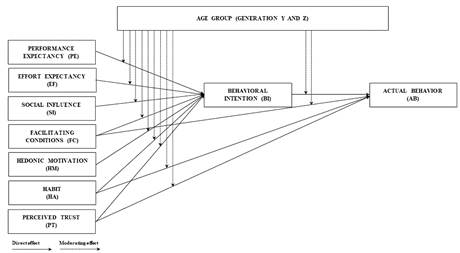
The theoretical model illustrates the key variables and their interrelationships that are the subject of this research (Figure 1). The model includes factors, which represent the basic components of the UTAUT2 model. Additionally, the model was extended by presenting the construct of perceived trust, as in the study by Zhou et al. (2023), where, apart from its influence on behavioral intention, its direct effect on the actual behavior of using Instagram when selecting a tourist destination is also considered. Also, the moderating role of generational segment (Y and Z) is included, thus enabling a deeper understanding of variations in behavioural patterns within the target assemblies.
Figure 1: Research model
|
|
Source: Authors’ research
3. Materials and methods
3.1. Questionnaire design
The survey was designed based on the model of Zhou et al. (2023), with a modification in the segment related to social networking platforms: Tik Tok was replaced by Instagram, and the questions were adapted to better suit the study framework. The questionnaire structure included three main parts: questions about demographic characteristics, the use of Instagram, as well as the key measurement of model variables. The study applied measurement scales adopted and modified from Zhou et al. (2023), with the scales for PE, EF, SI, FC, HM, HA, BI, and AB based on UTAUT2 measures (Venkatesh et al., 2003; 2012), while the PT scale was implemented directly from Zhou et al. (2023). To evaluate the key model variables, the respondents answered using a five-point Likert scale. A preliminary study was directed with 35 survey participants, in order to ensure the precision of the questions in the survey and to examine the measurement scale’s reliability.
3.2. Sampling and data collection
The survey was disseminated through Facebook and Instagram, as well as by e-mail, which enabled the collection of data from easily accessible respondents. In addition, survey participants were requested to forward the questionnaire to their acquaintances, to achieve a more direct approach to the target population. This methodological combination indicates the employment of non-probability sampling methods, particularly convenience sampling and snowball sampling (Etikan et al., 2016; Sadler et al., 2010). The information was acquired during June 2025, and 568 survey participants contributed to the study. 37 respondents were excluded from the analysis due to their identification as outliers, i.e., extreme values that significantly deviate from the rest of the sample and that can disproportionately affect the results of statistical models, jeopardizing their reliability and precision (Aguinis et al., 2013). Therefore, 531 valid surveys were utilized in the further investigation. The survey participants’ characteristics are shown in Table 1.
Table 1: Demographic characteristics of the respondents
|
Characteristics |
Frequency (n) |
Percentage (%) |
|
Age |
||
|
Generation Y |
287 |
50.5 |
|
Generation Z |
281 |
49.5 |
|
Gender |
|
|
|
Female |
358 |
63.0 |
|
Male |
210 |
37.0 |
|
Education |
|
|
|
Secondary school |
138 |
24.3 |
|
Applied studies |
134 |
23.6 |
|
University studies |
148 |
26.1 |
|
Master studies |
114 |
20.1 |
|
Doctoral studies |
34 |
6.0 |
|
Occupation |
||
|
Unemployed |
50 |
8.8 |
|
Entrepreneur |
80 |
14.1 |
|
Student |
113 |
19.9 |
|
Employed in public sector |
170 |
29.9 |
|
Employed in private sector |
155 |
27.3 |
Source: Authors’ research
The sample is evenly distributed according to age groups, with 287 respondents (50.5%) belonging to generation Y, and 281 respondents (49.5%) to generation Z. Women make up the majority of research participants, a total of 358 (63.0%); 148 respondents (26.1%), have a university degree, while 138 (24.3%) of the survey participants accomplished high school education; the largest number of respondents are employed in the public sector (170), which makes up 29.9% of the sample, while 155 respondents are employed in the private sector, i.e. 27.3.
4. Results and discussion
4.1. Results of descriptive statistical analysis
At the very beginning, we present the characteristics of respondents on the use of Instagram. About a third of respondents (191) use Instagram for more than two hours every day, which is 33.6%. Total of 250 survey participants use Instagram for tourist purposes only occasionally, i.e., 44.0% of respondents. Slightly less than half (265) would probably express a desire to travel to a certain destination because of the attractive content published on this network, which represents 46.7% of respondents. So far, 171 respondents, i.e., 30.1% of the sample, have visited the destination two or three times, inspired by content from Instagram. Other social networks for the purpose of additional verification of information found on Instagram are used by 204 respondents, which is 35.9% of the sample. In addition to Instagram, Facebook is used by 185 respondents (32.6%), while the same number (185), i.e., 32.6%, use Tik Tok when making a decision about choosing a tourist destination.
4.2. Testing the measured model
To ensure the consistency of the data, the model’s reliability and validity were evaluated; the corresponding test results are shown in the table below.
Table 2: Reliability and validity tests
|
Construct/ Indicator |
Loading |
Cronbach’s alpha |
Composite reliability (CR) |
Average variance extracted (AVE) |
|
Performance expectancy (PE) |
0.777 |
0.857 |
0.599 |
|
|
PE1 |
0.796 |
|
|
|
|
PE2 |
0.788 |
|
|
|
|
PE3 |
0.747 |
|
|
|
|
PE4 |
0.765 |
|
|
|
|
Effort expectancy (EF) |
0.673 |
0.820 |
0.603 |
|
|
EF1 |
0.778 |
|
|
|
|
EF2 |
0.756 |
|
|
|
|
EF3 |
0.795 |
|
|
|
|
Social influence (SI) |
0.644 |
0.808 |
0.584 |
|
|
SI1 |
0.780 |
|
|
|
|
SI2 |
0.731 |
|
|
|
|
SI3 |
0.780 |
|
|
|
|
Facilitating conditions (FC) |
0.656 |
0.814 |
0.593 |
|
|
FC1 |
0.790 |
|
|
|
|
FC2 |
0.796 |
|
|
|
|
FC3 |
0.722 |
|
|
|
|
Hedonic motivation (HM) |
0.701 |
0.833 |
0.625 |
|
|
HM1 |
0.802 |
|
|
|
|
HM2 |
0.797 |
|
|
|
|
HM3 |
0.772 |
|
|
|
|
Habit (HA) |
0.678 |
0.823 |
0.608 |
|
|
HA1 |
0.759 |
|
|
|
|
HA2 |
0.810 |
|
|
|
|
HA3 |
0.769 |
|
|
|
|
Perceived trust (PT) |
0.691 |
0.829 |
0.618 |
|
|
PT1 |
0.790 |
|
|
|
|
PT2 |
0.761 |
|
|
|
|
PT3 |
0.806 |
|
|
|
|
Behavioral intention (BI) |
0.722 |
0.843 |
0.643 |
|
|
BI1 |
0.768 |
|
|
|
|
BI2 |
0.833 |
|
|
|
|
BI3 |
0.803 |
|
|
|
|
Actual behavior (AB) |
0.756 |
0.860 |
0.672 |
|
|
AB1 |
0.820 |
|
|
|
|
AB2 |
0.825 |
|
|
|
|
AB3 |
0.815 |
|
|
|
Source: Authors’ research
The constructs of expected performance, hedonic motivation, behavioral intention and actual behavior showed high reliability (Cronbach α > 0.7). The other variables: effort expectancy, facilitating conditions, habit, and perceived trust, confirmed reliability close to the suggested value (α > 0.6), observing that Cronbach’s α is sensitive to a small number of indicators, and all these constructs in the study were evaluated with three indicators (Tavakol & Dennick, 2011). In the PLS approach, composite reliability is considered the primary and more robust measure of internal consistency, since it relies on factor loadings and accounts for measurement errors, making it less affected by the number of indicators (Hair et al., 2021). Recommended values are ≥ 0.70, while values ≥ 0.80 are considered a very good indicator of reliability. In this case, the CR for all concepts is larger than 0.80, which confirms the high internal consistency of the measurement. AVE assesses the extent to which a latent construct explains the variance of its indicators relative to the variance due to measurement error. Values ≥ 0.50 confirm convergent validity (Hair et al., 2021). In this research, the AVE ranges - 0.584 to 0.643- above the suggested verge and confirms the satisfactory convergent validity of all concepts.
HTMT (Heterotrait-Monotrait ratio) represents a modern approach for evaluating discriminant validity in structural modeling (Hair et al., 2021). Calculated HTMT values (Table 3) exceed the verge of 0.85, which indicates the existence of satisfactory discriminant validity of the concepts. The results show VIF values ranging from 2.304 to 3.393, indicating that multicollinearity is not a concern and that the constructs maintain reasonable independence (Hair et al., 2021; O’Brien, 2007).
Table 3: Discriminant validity and Variance Inflation Factor
|
Constr. |
PE |
EF |
SI |
FC |
HM |
HA |
PT |
BI |
AB |
VIF |
|
PE |
|
|
|
|
|
|
|
|
|
3.393 |
|
EF |
0.436 |
|
|
|
|
|
|
|
|
2.798 |
|
SI |
0.415 |
0.354 |
|
|
|
|
|
|
|
2.806 |
|
FC |
0.411 |
0.415 |
0.295 |
|
|
|
|
|
|
2.304 |
|
HM |
0.444 |
0.425 |
0.399 |
0.389 |
|
|
|
|
|
2.827 |
|
HA |
0.416 |
0.396 |
0.423 |
0.352 |
0.408 |
|
|
|
|
3.567 |
|
PT |
0.383 |
0.366 |
0.403 |
0.312 |
0.397 |
0.425 |
|
|
|
2.811 |
|
BI |
0.411 |
0.375 |
0.426 |
0.324 |
0.423 |
0.477 |
0.457 |
|
|
3.574 |
|
AB |
0.411 |
0.385 |
0.43 |
0.328 |
0.414 |
0.497 |
0.479 |
0.517 |
|
3.698 |
Source: Authors’ research
4.3. Hypotheses testing results
To assess the impact of Instagram on tourist destination choices for Generations Y and Z, PLS path analysis was applied, conducted in R (version 4.4.0) using the Pslpm package (version 0.5.1).
The structural model illustrates a high level of variance explanation for behavioral intention (R² = 0.689) and actual behavior (R² = 0.726). The Q² values (0.326 for behavioral intention and 0.429 for actual behavior) indicate satisfactory analytical importance of the model. According to the literature, R² values of 0.75, 0.50 and 0.25 are measured high (considerable), medium (moderate) and weak (low) level of variance explanation, while Q² values greater than 0 confirm good predictive relevance of the model (Hair et al., 2021). Below are the outcomes of the hypothesis testing.
Table 4: Path test results
|
Hypotheses/ Path |
R2 |
Q2 |
Direct effect |
t-value |
p-value |
Supported or not |
|
Behavioral intention |
0.689 |
0.326 |
|
|
|
|
|
H1: PE → BI |
|
|
0.078 |
1.800 |
0.073 |
No |
|
H2: EF → BI |
|
|
0.001 |
0.023 |
0.982 |
No |
|
H3: SI → BI |
|
|
0.130 |
3.340 |
<0.001 |
Yes |
|
H4a: FC → BI |
|
|
-0.025 |
-0.700 |
0.484 |
No |
|
H5: HM → BI |
|
|
0.139 |
3.540 |
<0.001 |
Yes |
|
H6a: HA → BI |
|
|
0.354 |
8.900 |
<0.001 |
Yes |
|
H8a: PT → BI |
|
|
0.269 |
7.430 |
<0.001 |
Yes |
|
Actual behavior |
0.726 |
0.429 |
|
|
|
|
|
H4b: FC → AB |
|
|
0.011 |
0.410 |
0.682 |
No |
|
H6b: HA → AB |
|
|
0.331 |
8.820 |
<0.001 |
Yes |
|
H8b: PT → AB |
|
|
0.264 |
7.710 |
<0.001 |
Yes |
|
H7: BI → AB |
|
|
0.337 |
8.890 |
<0.001 |
Yes |
Source: Authors’ research
Regarding behavioral intention, the variables SI (β = 0.130, t = 3.340, p = 0.001), HM (β = 0.139, t = 3.540, p < 0.001), HA (β = 0.354, t = 8.900, p < 0.001) and PT (β = 0.269, t = 7.430, p < 0.001), which confirms hypotheses H3, H5, H6a and H8a. In contrast, the effects of PE (β = 0.078, t = 1.800, p = 0.073), EF (β = 0.001, t = 0.023, p = 0.982) and FC (β = –0.025, t = –0.700, p = 0.484) on behavioral intention are not statistically significant, and hypotheses H1, H2 and H4a are rejected. Regarding actual behavior, HA (β = 0.331, t = 8.820, p < 0.001), PT (β = 0.264, t = 7.710, p < 0.001) and BI (β = 0.337, t = 8.890, p < 0.001) have significant positive direct effects, confirming hypotheses H6b, H8b and H7. The effect of FC on actual behavior (β = 0.011, t = 0.410, p = 0.682) is not significant, and hypothesis H4b is not confirmed.
In conclusion, the obtained results indicate the importance of HA, PT and BI constructs in predicting actual behavior, as well as the importance of HA, PT, SI and HM in shaping behavioral intention, while other effects were not statistically significant.
4.4. Results of multi-cluster analysis
The results of the multi-cluster analysis (Table 5), conducted to examine the moderating role of age, showed that age groups (Generation Y and Generation Z) perceive relationships within the conceptual model similarly to a certain extent.
Among Generation Y, significant positive effects on behavioral intention (BI) were found for social influence (SI → BI) (β = 0.172; p = 0.002), habit (HA → BI) (β = 0.353; p < 0.001) and perceived trust (PT → BI) (β = 0.260; p < 0.001). Actual behavior (AB) in this group is significantly influenced by habit (HA → AB) (β = 0.403; p < 0.001), perceived trust (PT → AB) (β = 0.291; p < 0.001) and behavioral intention (BI → AB) (β = 0.297; p < 0.001).
Among Generation Z, significant predictors of behavioral intention (BI) are hedonic motivation (HM → BI) (β = 0.204; p < 0.001), habit (HA → BI) (β = 0.342; p < 0.001) and perceived trust (PT → BI) (β = 0.294; p < 0.001). Actual behavior (AB) is significantly influenced by habit (HA → AB) (β = 0.260; p < 0.001), perceived trust (PT → AB) (β = 0.237; p < 0.001) and behavioral intention (BI → AB) (β = 0.381; p < 0.001).
Table 5: Multi-cluster structural equation model estimation results
|
Path |
Path coef. (Y) |
Path coef. (Z) |
Diff. (Y and Z) |
t-value (Y) |
t-value (Z) |
t-value (Diff. Y and Z) |
p-value (Y) |
p-value (Z) |
p-value (Diff. Y and Z) |
|
PE → BI |
0.088 |
0.060 |
0.028 |
1.410 |
0.981 |
0.343 |
0.160 |
0.328 |
0.366 |
|
EF → BI |
-0.029 |
0.037 |
0.066 |
-0.475 |
0.724 |
0.827 |
0.635 |
0.470 |
0.204 |
|
SI → BI |
0.172 |
0.086 |
0.86 |
3.190 |
1.500 |
0.852 |
0.002 |
0.134 |
0.197 |
|
FC → BI |
0.031 |
-0.063 |
0.095 |
0.617 |
-1.240 |
1.014 |
0.538 |
0.216 |
0.156 |
|
HM → BI |
0.069 |
0.204 |
0.136 |
1.150 |
3.900 |
1.515 |
0.250 |
<0.001 |
0.065 |
|
HA → BI |
0.353 |
0.342 |
0.011 |
6.020 |
6.120 |
0.547 |
<0.001 |
<0.001 |
0.292 |
|
PT → BI |
0.260 |
0.294 |
0.033 |
4.850 |
5.940 |
0.498 |
<0.001 |
<0.001 |
0.309 |
|
FC → AB |
-0.050 |
0.068 |
0.118 |
-1.330 |
1.680 |
2.076 |
0.185 |
0.094 |
0.019 |
|
HA → AB |
0.403 |
0.260 |
0.144 |
8.040 |
4.620 |
1.333 |
<0.001 |
<0.001 |
0.092 |
|
PT → AB |
0.291 |
0.237 |
0.054 |
6.330 |
4.660 |
0.839 |
<0.001 |
<0.001 |
0.201 |
|
BI → AB |
0.297 |
0.381 |
0.085 |
5.890 |
6.720 |
0.866 |
<0.001 |
<0.001 |
0.193 |
Source: Authors’ research
The differences test between groups showed statistically significant differences only in the path facilitating conditions to actual behavior (FC → AB) (t = 2.076; p = 0.019), where the effect was positive in Generation Z, while it was not significant in Generation Y. For all other trajectories, the differences between generations were not statistically important (p > 0.05) - most relationships within the model function similarly in both age groups, i.e., the results indicate that the mechanisms that shape intention and actual behavior are largely consistent between both generational cohorts.
4.5. Discussion
The results of the study indicate that habit (HA), hedonic motivation (HM), and social influence (SI) are significant predictors of behavioral intention (BI) for using Instagram in the tourist destination choice context. These results are consistent with the theoretical foundations and prior research on technology acceptance in tourism (Bakshi et al., 2019). In the present study, the paths from performance expectancy (PE) and effort expectancy (EE) to behavioral intention (BI) were not significant, whereas Zhou et al. (2023) reported both paths as significant. Perceived trust (PT) emerged as a key driver of behavioral intention in this study, consistent with the findings of Zhou et al. (2023) justifying its inclusion in the model. Trust in the source and content on social media reduces perceived risk and facilitates travel decision-making (Filieri et al., 2015).
Concerning actual behavior (AB), these findings are consistent with Zhou et al. (2023), who also identified HA and BI as the strongest predictors of actual behavior. This study reveals a direct influence of perceived trust (PT) on actual behavior (AB), a path not included in the Zhou et al. (2023), constituting a significant theoretical contribution and offering deeper insight into the translation from intention to actual behavior (Lui & Zainuldin, 2025). Facilitating conditions (FC) did not show a significant impact on either behavioral intention or actual behavior, consistent with the findings of Zhou et al. (2023). This result can be partly attributed to the relatively uniform profile of participants. Most of them belong to generations with strong digital literacy and reliable access to the technological tools needed to use Instagram. In such populations, technical and functional factors show very little variability, reducing their predictive potential.
The analysis of the moderating effect of age groups (Gen Y and Gen Z) shows that most structural relationships remain stable across both generations, albeit with clear differences in the strength of certain effects. In both segments, habit (HA) and perceived trust (PT) represent key determinants of behavioral intention (BI), indicating the broad stability of these constructs in a digital environment. However, hedonic motivation (HM) was statistically significant only for Gen Z, while it was not confirmed for Gen Y. This suggests that younger Instagram users place greater importance on the platform’s entertaining and emotional features, whereas older users base their intention primarily on more stable factors such as habit and trust. Social influence (SI) had a significant effect on BI only for Gen Y, which contrasts with Zhou et al. (2023), where SI had a stronger impact on younger users. In our study, older users appear more sensitive to the expectations of their social environment and reference groups, while Gen Z forms intentions primarily based on personal experience, habit, and trust in content.
The results related to actual behavior (AB) indicate that habit (HA), perceived trust (PT), and behavioral intention (BI) are significant predictors in both generations, partially aligning with the findings of Zhou et al. (2023). However, in our study, their effects are not evenly distributed. For Gen Y, HA has a stronger impact on AB, suggesting that older users are more likely to rely on established behavior. In contrast, behavioral intention (BI) has the strongest impact on actual behavior (AB) among Gen Z, suggesting that younger users convert their intentions into actions more directly. Facilitating conditions (FC) were statistically significant only for Gen Z, whereas no significant effect was observed for Gen Y. This differs with Zhou et al. (2023), where facilitating conditions (FC) did not have significant impact on either generation. The results indicate that younger users attach greater importance to the availability of technical resources and supportive conditions when translating intention to actual behavior, while older users do not consider these factors as crucial.
Instagram use in Serbia is primarily oriented towards seeking inspiration, visual representations of destinations, and content from local creators, consistent with research highlighting the platform’s role in visual motivation and the early stages of travel planning (Tešin et al., 2022). Global usage patterns indicate an increasing professionalization of influencers and a stronger commercial integration of the platform into tourism marketing (Rodríguez-Hidalgo et al., 2023), whereas in Serbia a more personalized and less commercialized approach remains prevalent, based on authentic recommendations and informal communication (Pioniri Communications, 2025). This difference may also be related to the motives for using Instagram, as users in markets such as Serbia perceive the platform primarily as a social and entertaining channel, which further explains the prominent role of Perceived Trust, Social Influence, and Habit identified in our mode.
Although the strength of some effects varies between cohorts, these findings underscore Instagram’s overall influence on the tourist destination selection process, while also revealing generation-specific motivational patterns among younger and older cohorts.
5. Conclusion
This research intended to examine the impact of various features of the UTAUT2 model, with the addition of perceived trust, on the intention and actual behavior of Instagram users when choosing a tourist destination, with special reference to the behavior of Gene Y and Gen Z. The outcomes displayed that social impact, hedonic motivation, habit and perceived trust are key determinants of behavioral intention, while habit, trust and behavioral intention significantly influence actual behavior. Moderating consequence analysis of age indicated that generational affiliation in the outcome of facilitating conditions on authentic behavior significantly moderates this relationship, where the influence is significant in Generation Z, but not in Generation Y. The obtained R² values approve the good analytical power of the model.
5.1. Theoretical implications
This study makes several theoretical contributions to the field of digital tourist behavior by extending and contextualizing the UTAUT2 model (Venkatesh et al., 2012; 2003). The importance of perceived trust as a key factor in the decision-making process is confirmed, with trust exerting a direct effect not only on behavioral intention but also on actual behavior. This finding extends the results of Zhou et al. (2023), who examined the impact of trust only on intention, and highlights trust as one of the central mechanisms in social media-based tourism decision-making.
The study provides empirical support for the extended UTAUT2 model in the Serbian cultural context, building on previous research that has tested the model in various geographical settings (Agag & El-Masry, 2016; Foroughi et al., 2025; Octaviani et al., 2023; Sharma et al., 2023;). The findings indicate a high predictive value of the model within Serbia’s digital environment, thereby confirming its broader international applicability.
Unlike many previous studies (Agag & El-Masry, 2016; Foroughi et al., 2025; Octaviani et al., 2023; Sharma et al., 2023), that consider age as a general demographic factor, this research distinguishes explicitly between Gen Y and Gen Z. Such a distinction allows for a more nuanced understanding of generational differences in digital technology adoption in tourism, particularly in the Serbian context where systematic generational segmentation has been limited. The analysis reveals that certain UTAUT” constructs function differently across these cohorts: hedonic motivation was significant only for Gen Z, whereas social influence showed a meaningful impact exclusively for Gen Y.
Facilitating conditions (FC) significantly influences actual behavior only for Gen Z, an effect not observed in (Zhou et al., 2023) study. These findings suggest that younger users prioritize ease of technology use, and the availability of resources when translating intentions into actions. The study enhances the UTAUT2 framework by incorporating perceived trust as a predictor of actual behavior, validating the model in a new cultural setting, and identifying generation-specific patterns that extend beyond earlier research
5.2. Practical implications
The central importance of Perceived Trust is confirmed, influencing not only users’ Behavioral Intention but also their Actual Behavior. This consequence builds on the work of Zhou et al. (2023) by showing that Instagram content that is authentic, transparent, and credible can directly drive actual travel decisions, rather than simply generating interest or intention. Destination management organizations should prioritize creating content that conveys trustworthiness, is based on genuine experiences, and clearly signals authenticity.
A clear generational pattern was also observed, enabling more precise market segmentation. For Generation Y, Social Influence and established Habits are key, suggesting that communication strategies should rely on social proof, recommendations from relevant groups, and consistent information flows. Gen Z seems to make travel decisions based on hedonic motivation, trust in content, and access to technical resources. Content shaped for younger tourists should be visually attractive, collaborative, and enjoyable. At the same time, it should ensure speedy access to information, smooth navigation, approachable design, and support via preferred channels such as short form videos, chatbots, and customized recommendations.
Habit plays a key role in driving actual behavior across both cohorts, emphasizing the necessity to foster consistent engagement with Instagram as a source of inspiration and information. Strategies such as reliable communication, divided content, and loyalty programs can create stable digital behavior patterns, which over time may enhance interest in specific destination.
Such approaches can increase the likelihood of Instagram users not only forming intentions, but also translating them into concrete travel decisions, ultimately selecting particular tourist destinations.
5.3. Research limitations
The use of non-probability sampling techniques limits the representativeness of the findings; therefore, they cannot be considered fully representative of the entire population. Furthermore, the research was conducted in Serbia, which implies cultural limitations and suggests the need for caution when applying the results in a wider international context.
The subject of the research was exclusively the Instagram platform, while users also use other networks (Tik Tok, Facebook, YouTube) in the decision-making procedure. Additionally, data were collected through self-report by respondents, which may lead to subjective biases, such as socially desirable responses.
It is recommended to increase the sample by incorporating older generations, which would enable a more detailed overview of intergenerational differences. Furthermore, future research should include more social networks and a comparative analyses of their effects on the choice of tourist destinations, bearing in mind that users rarely use only one platform in practice.
CRediT author statement
Mihajlo Đurović: Conceptualization, Data curation, Writing – original draft, Project administration, Resources, Writing – review & editing, Validation. Tanja Vujović: Conceptualization, Methodology, Writing – review & editing, Supervision, Validation. Goran Perić: Conceptualization, Methodology, Formal analysis, Investigation, Data curation, Writing – original draft, Writing – review & editing, Validation, Project administration. Cesim Behremen: Writing – review & editing, Resources, Validation, Visualization.
Declaration of generative AI in the writing process
During the preparation of this work the authors did not use generative AI and AI-assisted technologies in the writing process.
Conflict of interest
The authors declare no conflict of interest.
References
1. Agag, G., & El-Masry, A. A. (2016). Understanding consumer intention to participate in online travel community and effects on consumer intention to purchase travel online and WOM: An integration of innovation diffusion theory and TAM with trust. Computers in Human Behavior, 60, 97–111. https://doi.org/10.1016/j.chb.2016.02.038
2. Aguinis, H., Gottfredson, R. K., & Joo, H. (2013). Best-practice recommendations for defining, identifying, and handling outliers. Organizational Research Methods, 16(2), 270–301. https://doi.org/10.1177/1094428112470848
3. Al Rousan, R., Siddiqui, S., Bano, N., & Sujood. (2024). Urban tourists’ intention towards visiting national parks: an exertion of theory of planned behaviour and expectancy theory. Journal of Hospitality and Tourism Insights, 7(2), 653–675. https://doi.org/10.1108/JHTI-11-2022-0549
4. Alkier, R., & Perić, G. (2021). The influence of social networks on the choice of tourism destination: The case of Kvarner. Bizinfo Blace, 12(2), 215–229. https://doi.org/10.5937/bizinfo2102215A
5. Almunawar, M. N., Anshari, M., & Lim, S. A. (2022). Customer acceptance of online travel agents in Indonesia. Journal of Asia-Pacific Business, 23(3), 254–272. https://doi.org/10.1080/10599231.2022.2095588
6. Atasoy, B., & Türkay, O. (2024). Traveling in the digital world: How does Instagram influences young people’s tourism engagement and intention in terms of social cognitive learning theory? Revista Rosa dos Ventos-Turismo e Hospitalidade, 16(4), 946–970. https://doi.org/10.18226/21789061.v16i4p970
7. Bakshi, S., Dogra, N., & Gupta, A. (2019). What motivates posting online travel reviews? Integrating gratifications with technological acceptance factors. Tourism and Hospitality Management, 25(2), 335–354. https://doi.org/10.20867/thm.25.2.5
8. Băltescu, C. A., & Untaru, E. N. (2025). Exploring the characteristics and extent of travel influencers’ impact on Generation Z tourist decisions. Sustainability, 17(1), 66. https://doi.org/10.3390/su17010066
9. Björk, P., & Jansson, T. (2008). Travel decision making-the role of habit. Tourismos, 3(2), 11–34. https://doi.org/10.26215/tourismos.v3i2.69
10. Boto-García, D., & Baños-Pino, J. F. (2022). Social influence and bandwagon effects in tourism travel. Annals of Tourism Research, 93, 103366. https://doi.org/10.1016/j.annals.2022.103366
11. Chin, W., Cheah, J. H., Liu, Y., Ting, H., Lim, X. J., & Cham, T. H. (2020). Demystifying the role of causal-predictive modeling using partial least squares structural equation modeling in information systems research. Industrial Management & Data Systems, 120(12), 2161–2209. https://doi.org/10.1108/IMDS-10-2019-0529
12. Dai, F., Wang, D., & Kirillova, K. (2022). Travel inspiration in tourist decision making. Tourism Management, 90, 104484. https://doi.org/10.1016/j.tourman.2021.104484
13. DataReportal. (2025). Digital 2025 global overview report. Retrieved August 20, 2025 from https://datareportal.com/reports/digital-2025-global-overview-report
14. Dramićanin, S., & Sančanin, B. (2020). Influence of internet content on tourists decision to visit a cultural tourism destination. BizInfo Blace, 11(2), 1–17. https://doi.org/10.5937/bizinfo2002001D
15. Dramićanin, S., Perić, G., & Gašić, M. (2023). The impact of TikTok on travel decision. International Scientific Conference on Economy, Management and Information Technologies, 1(1), 129–138. https://doi.org/10.46793/ICEMIT23.129D
16. Đuričanin, J., Gašić, M., Veličković, J., & Pavlović, N. (2021). Oglašavanje na društvenoj mreži Facebook [Advertising on Facebook social network]. BizInfo Blace, 12(2), 171–181. https://doi.org/10.5937/bizinfo2102171D
17. Dwityas, N. A., & Briandana, R. (2017). Social media in travel decision making process. International Journal of Humanities and Social Science, 7(7), 193–201.
18. ELTayeb, N. (2021). The impact of Insta Tourism on tourism decision making of Generation Y. Journal of Association of Arab Universities for Tourism and Hospitality, 20(2), 132–151. https://doi.org/10.21608/jaauth.2021.65542.1142
19. Eman, N., & Refaie, N. (2025). The effect of Instagram posts on tourists’ destination perception and visiting intention. Journal of Vacation Marketing, 31(2), 443–456. https://doi.org/10.1177/13567667231209514
20. Etikan, I., Musa, S. A., & Alkassim, R. S. (2016). Comparison of convenience sampling and purposive sampling. American Journal of Theoretical and Applied Statistics, 5(1), 1–4. https://doi.org/10.11648/j.ajtas.20160501.11
21. Ferreira, L. B., & de Souza, I. C. M. R. The influence of Instagram digital marketing on tourist destination image and visit intention. Marketing & Tourism, 10(1), 1–34. https://doi.org/10.29149/mtr.v10i1.8927
22. Filieri, R., Alguezaui, S., & McLeay, F. (2015). Why do travelers trust TripAdvisor? Antecedents of trust towards consumer-generated media and its influence on recommendation adoption and word of mouth. Tourism Management, 51, 174–185. https://doi.org/10.1016/j.tourman.2015.05.007
23. Fleetwood, S. (2021). A definition of habit for socio-economics. Review of Social Economy, 79(2), 131–165. https://doi.org/10.1080/00346764.2019.1630668
24. Foroughi, B., Iranmanesh, M., Asadi, S., Al-Emran, M., Ghobakhloo, M., & Batouei, A. (2025). Extending UTAUT2 to explore intention to use ChatGPT for travel planning: A hybrid PLS-ANN approach. Journal of Tourism Futures, 1–23. https://doi.org/10.1108/JTF-11-2023-0256
25. Gardiner, S., King, C., & Grace, D. (2013). Travel decision making: An empirical examination of generational values, attitudes, and intentions. Journal of Travel Research, 52(3), 310–324. https://doi.org/10.1177/0047287512467699
26. Godoe, P., & Johansen, T. S. (2012). Understanding adoption of new technologies: Technology readiness and technology acceptance as an integrated concept. Journal of European Psychology Students, 3(1), 38–52. https://doi.org/10.5334/jeps.aq
27. Gulati, S. (2024). Exploring the generational influence on social media-based tourist decision-making in India. Information Discovery and Delivery, 52(2), 185–196. https://doi.org/10.1108/IDD-11-2022-0115
28. Hair, J. F., Hult, G. T. M., Ringle, C. M., Sarstedt, M., Danks, N. P., & Ray, S. (2021). Partial Least Squares Structural Equation Modeling (PLS-SEM) Using R: A Workbook. Springer. https://doi.org/10.1007/978-3-030-80519-7
29. Halim, A., & Moekahar, F. (2024). The Phenomenon Hedonism on Instagram. Proceeding of International Conference on Communication and Media Digital, 1(1), 93–102.
30. Harari, T. T. E., Sela, Y., & Bareket-Bojmel, L. (2023). Gen Z during the COVID-19 crisis: A comparative analysis of the differences between Gen Z and Gen X in resilience, values and attitudes. Current Psychology, 42(28), 24223–24232. https://doi.org/10.1007/s12144-022-03501-4
31. Hauser, D., Leopold, A., Egger, R., Ganewita, H., & Herrgessell, L. (2022). Aesthetic perception analysis of destination pictures using# beautiful destinations on Instagram. Journal of Destination Marketing & Management, 24, 100702. https://doi.org/10.1016/j.jdmm.2022.100702
32. Helal, E. A., Hassan, T. H., Abdelmoaty, M. A., Salem, A. E., Saleh, M. I., Helal, M. Y., ... & Szabo-Alexi, P. (2023). Exploration or exploitation of a neighborhood destination: The role of social media content on the perceived value and trust and revisit intention among world cup football fans. Journal of Risk and Financial Management, 16(3), 210. https://doi.org/10.3390/jrfm16030210
33. Ho, R. C., Amin, M., Ryu, K., & Ali, F. (2021). Integrative model for the adoption of tour itineraries from smart travel apps. Journal of Hospitality and Tourism Technology, 12(2), 372–388. https://doi.org/10.1108/JHTT-03-2020-0060
34. Ismail, F., Padlee, S. F., Napatah, N. N., Ramlan, M., & Zaki, N. A. M. (2025). Influencing factors of social media usage and trust as mediators on the intention to travel among the young generation. Asian People Journal (APJ), 8(1), 114–132. https://doi.org/10.37231/apj.2025.8.1.718
35. Javed, M., Tučková, Z., & Jibril, A. B. (2020). The role of social media on tourists’ behavior: An empirical analysis of millennials from the Czech Republic. Sustainability, 12(18), 7735. https://doi.org/10.3390/su12187735
36. Jevtović, A. (2019). Sociology of tourism in the globalization process and social networks. BizInfo Blace, 10(2), 43–62. https://doi.org/10.5937/bizinfo1902043J
37. Kilipiri, E., Papaioannou, E., & Kotzaivazoglou, I. (2023). Social media and influencer marketing for promoting sustainable tourism destinations: The Instagram case. Sustainability, 15(8), 6374. https://doi.org/10.3390/su15086374
38. Kim, J. H., Ritchie, J. R., & Tung, V. W. S. (2010). The effect of memorable experience on behavioral intentions in tourism: A structural equation modeling approach. Tourism Analysis, 15(6), 637–648. https://doi.org/10.3727/108354210X12865107383541
39. Kim, Y. R., Nsom Kimbu, A., Ramakrishnan, S., & Saha, P. (2025). Understanding the travel decision-making behaviors of ethnic minority tourists: The moderating role of psychological empowerment. Journal of Travel Research, 64(5), 1064–1084. https://doi.org/10.1177/00472875241245407
40. Lejealle, C., King, B., & Chapuis, J. M. (2021). Decoding the educational travel decision: Destinations, institutions and social influence. Current Issues in Tourism, 24(21), 3107–3120. https://doi.org/10.1080/13683500.2020.1793001
41. Linnes, C., & Metcalf, B. (2017). iGeneration and their acceptance of technology. International Journal of Management & Information Systems (Online), 21(2), 11–26. https://doi.org/10.19030/ijmis.v21i2.10073
42. Liu, D. Y., Wang, K. C., Mao, T. Y., & Yang, C. C. (2021). The impact of Instagram stories on tourists’ consumption behavior in smart city night markets. Mathematical Problems in Engineering, 2021(1), 5509265. https://doi.org/10.1155/2021/5509265
43. Lui, T. K., & Zainuldin, M. H. (2025). Are mobile wallets the future of tourism in developing countries? A tap into tourists’ actual adoption in Malaysia. Consumer Behavior in Tourism and Hospitality. https://doi.org/10.1108/CBTH-01-2025-0004
44. Mahapatra, S., Ray, S., & Mukherjee, S. (2025). Travel influencers’ impact on followers’ engagement behavior. Tourism Recreation Research, 1–18. https://doi.org/10.1080/02508281.2025.2484737
45. Martins, W. S., Martins, M., & Morais, E. P. (2025). Exploring the influence of social media on tourist decision-making: Insights from Cape Verde. Tourism and Hospitality, 6(1), 45. https://doi.org/10.3390/tourhosp6010045
46. Mazar, A., & Wood, W. (2018). Defining habit in psychology. The psychology of habit: Theory, mechanisms, change, and contexts (pp. 13–29). Cham: Springer International Publishing. https://doi.org/10.1007/978-3-319-97529-0_2
47. Mishra, R., Sharma, M. P., Seth, K., & Singh, V. (2023). A study on consumers’ travel purchase intention through travel apps. Prabandhan: Indian Journal of Management, 16(7), 25–42. https://doi.org/10.17010/pijom/2023/v16i7/172926
48. Mude, G., & Undale, S. (2023). Social media usage: A comparison between Generation Y and Generation Z in India. International Journal of E-Business Research (IJEBR), 19(1), 1–20. https://doi.org/10.4018/IJEBR.317889
49. Netemeyer, R. G., & Bearden, W. O. (1992). A comparative analysis of two models of behavioral intention. Journal of the Academy of Marketing Science, 20(1), 49–59. https://doi.org/10.1007/BF02894629
50. Nur’afifah, O., & Prihantoro, E. (2021). The influence of social media on millennial generation about travel decision-making. Jurnal The Messenger, 13(3), 238–255. https://doi.org/10.26623/themessenger.v13i3.2328
51. O’Brien, R. M. (2007). A caution regarding rules of thumb for variance inflation factors. Quality & Quantity, 41(5), 673–690. https://doi.org/10.1007/s11135-006-9018-6
52. Octaviani, R. D., Prabowo, H., & Sari, D. (2023). Determinants of Indonesian Gen Z’s purchase behavior on online travel platforms: Extending UTAUT model. Innovative Marketing, 19(4), 54–65. https://doi.org/10.21511/im.19(4).2023.05
53. Oncioiu, I., & Priescu, I. (2022). The use of virtual reality in tourism destinations as a tool to develop tourist behavior perspective. Sustainability, 14(7), 4191. https://doi.org/10.3390/su14074191
54. Park, S., & Ahn, D. (2022). Seeking pleasure or meaning? The different impacts of hedonic and eudaimonic tourism happiness on tourists’ life satisfaction. International Journal of Environmental Research and Public Health, 19(3), 1162. https://doi.org/10.3390/ijerph19031162
55. Pioniri Communications. (2025). Social Serbia 2025. Retrieved August 20, 2025 from https://pioniri.com/sr/socialserbia2025/
56. Platon, O. E. (2023). Using Instagram for destination marketing: Creating the perception of a tourism destination experience and influencing the travel decision-making process. Challenges of the Knowledge Society, 16, 669–676.
57. Pop, R. A., Săplăcan, Z., Dabija, D. C., & Alt, M. A. (2022). The impact of social media influencers on travel decisions: The role of trust in consumer decision journey. Current Issues in Tourism, 25(5), 823–843. https://doi.org/10.1080/13683500.2020.1835211
58. Quintal, V., Xiong, Q., & Phau, I. (2025). Exploring hedonic and calculated hedonic motivation and well-being in cultural tourism. Current Issues in Tourism, 1–15. https://doi.org/10.1080/13683500.2025.2531570
59. Rodríguez-Hidalgo, A. B., Salcedo, A. L. T., & Castro-ricalde, D. (2023). Influencer marketing in tourism: A systematic literature review. Revista de Comunicación de la SEECI, 56, 99–124. https://doi.org/10.15198/seeci.2023.56.e809
60. Sadler, G. R., Lee, H. C., Lim, R. S. H., & Fullerton, J. (2010). Recruitment of hard‐to‐reach population subgroups via adaptations of the snowball sampling strategy. Nursing & Health Sciences, 12(3), 369–374. https://doi.org/10.1111/j.1442-2018.2010.00541.x
61. Salah, N. K., Ibrahim, P., & Hammoud, G. A. (2025). Impact of Insta tourism on youth travel decision making to Egypt. International Journal of Tourism, Archaeology and Hospitality, 5(2), 140–163. https://doi.org/10.21608/ijtah.2025.359652.1142
62. Sarac, O., Batman, O., & Kiper, V. O. (2019). Comparing hedonism with responsible tourism diversities. Journal of Tourismology, 5(2), 151–170. https://doi.org/10.26650/jot.2019.5.2.0012
63. Șchiopu, A. F., Nica, A. M., Pădurean, A. M., & Ţală, M. L. (2023). Generation Z vs. Generation Y: different from or similar? A comparison of centennials and millennials regarding the use of social media for travel purposes. Cactus the Tourism Journal for Research, Education, Culture and Soul, 5(1), 20–35. https://doi.org/10.24818/CTS/5/2023/1.03
64. Sharma, N., Khatri, B., Khan, S. A., & Shamsi, M. S. (2023). Extending the UTAUT model to examine the influence of social media on tourists’ destination selection. Indian Journal of Marketing, 53(4), 47–64. https://doi.org/10.17010/ijom/2023/v53/i4/172689
65. Sia, P. Y. H., Saidin, S. S., & Iskandar, Y. H. P. (2022). A conceptual model of emerging mobile travel apps for smart tourism among gen X, gen Y, and gen Z. Mobile computing and technology applications in tourism and hospitality (pp. 189–220). IGI Global Scientific Publishing. https://doi.org/10.4018/978-1-7998-6904-7.ch009
66. Stanišić, T., Lazarević, S., & Kopeva, D. (2024). Exploring adventure tourism trends through image content analysis of Instagram posts. Hotel and Tourism Management, 12(2), 123–138. https://doi.org/10.5937/menhottur2400013S
67. Sudarević, T., Kostić, D., & Jevtić, J. (2024). Primena društvenih mreža u planiranju putovanja generacije Z [The application of social networks in the travel planning of Generation Z]. Marketing, 55(3), 175–185. https://doi.org/10.5937/mkng2403175S
68. Sudarman, D., & Sabaruddin, S. (2024). Analysis of the effect of facilitating conditions and electronic words of mouth on airlines ticket purchase decision through trust as a mediating variable. Transekonomika: akuntansi, bisnis dan keuangan, 4(3), 230–240. https://doi.org/10.55047/transekonomika.v4i3.627
69. Sutrisno, R., Rafdinal, W., Septyandi, C. B., Gaffar, M. R., & Susanto, E. (2024). Disentangling digital influences on tourist behavior: The role of trust and destination image in the social media era. Journal of Tourism, Hospitality and Travel Management, 2(2), 129–142. http://doi.org/10.58229/jthtm.v2i2.318
70. Syakier, W. A., & Hanafiah, M. H. (2022). Tour guide performances, tourist satisfaction and behavioural intentions: A study on tours in Kuala Lumpur city centre. Journal of Quality Assurance in Hospitality & Tourism, 23(3), 597–614. https://doi.org/10.1080/1528008X.2021.1891599
71. Szymkowiak, A., Melović, B., Dabić, M., Jeganathan, K., & Kundi, G. S. (2021). Information technology and Gen Z: The role of teachers, the internet, and technology in the education of young people. Technology in Society, 65, 101565. https://doi.org/10.1016/j.techsoc.2021.101565
72. Tavakol, M., & Dennick, R. (2011). Making sense of Cronbach’s Alpha. International Journal of Medical Education, 2, 53–55. https://doi.org/10.5116/ijme.4dfb.8dfd
73. Tešin, A., Pivac, T., Besermenji, S., & Obradović, S. (2022). Exploring the influence of Instagram on travel destination choice. The European Journal of Applied Economics, 19(1), 66–80. https://doi.org/10.5937/ejae19-33584
74. Tseng, L. Y., Chang, J. H., & Zhu, Y. L. (2024). What drives the travel switching behavior of Chinese Generation Z consumers. Journal of Tourism Futures, 10(1), 131–146. https://doi.org/10.1108/JTF-07-2020-0110
75. Venkatesh, V., Morris, M. G., Davis, G. B., & Davis, F. D. (2003). User acceptance of information technology: Toward a unified view. MIS Quarterly, 425–478. https://doi.org/10.2307/30036540
76. Venkatesh, V., Thong, J. Y., & Xu, X. (2012). Consumer acceptance and use of information technology: Extending the unified theory of acceptance and use of technology. MIS Quarterly, 36(1), 157–178. https://doi.org/10.2307/41410412
77. Verma, K., Dhodi, R. K., & Dhodi, R. (2023). The influence of Instagram on generation Z travel motivation and destination choice making to the actual travelling. Technology and Social Transformations in Hospitality, Tourism and Gastronomy: South Asia Perspectives, 54–63. https://doi.org/10.1079/9781800621244.0000
78. Vidal-Silva, C., Sánchez-Ortiz, A., Serrano-Malebrán, J., Arriagada, V., Flores, M., Godoy, M., & Vargas, C. (2024). Social influence, performance expectancy, and price value as determinants of telemedicine services acceptance in Chile. Heliyon, 10(5), e27067. https://doi.org/10.1016/j.heliyon.2024.e27067
79. Wang, H., & Yan, J. (2022). Effects of social media tourism information quality on destination travel intention: Mediation effect of self-congruity and trust. Frontiers in Psychology, 13, 1049149. https://doi.org/10.3389/fpsyg.2022.1049149
80. Wang, L., Law, R., Hung, K., & Guillet, B. D. (2014). Consumer trust in tourism and hospitality: A review of the literature. Journal of Hospitality and Tourism Management, 21, 1–9. https://doi.org/10.1016/j.jhtm.2014.01.001
81. Wang, T. Y., & Park, J. (2023). Destination information search in social media and travel intention of generation Z university students. Journal of China Tourism Research, 19(3), 570–588. https://doi.org/10.1080/19388160.2022.2101574
82. Werenowska, A., & Rzepka, M. (2020). The role of social media in generation Y travel decision-making process (case study in Poland). Information, 11(8), 396. https://doi.org/10.3390/info11080396
83. Williams, D. M., Rhodes, R. E., & Conner, M. T. (2018). Psychological hedonism, hedonic motivation, and health behavior. Affective determinants of health behavior, 204, 205–234. https://doi.org/10.1093/oso/9780190499037.003.0010
84. Yuliantie, E. (2024). The effect of performance expectancy on behavioral intention: The mediating role of satisfaction. Journal of Management and Business Insight, 2(1), 80–89. https://doi.org/10.12928/jombi.v2i1.1123
85. Zhang, Y., Cole, S., Ricci, P., & Gao, J. (2019). Context-based leisure travel facilitation among people with mobility challenges: A self-determination theory approach. Journal of Travel Research, 58(1), 42–62. https://doi.org/10.1177/0047287517741004
86. Zhou, L., & Xue, F. (2022). Effects of Instagram user-generated content on travel inspiration and planning: An extended model of technology acceptance. Journal of Promotion Management, 28(3), 239–260. https://doi.org/10.1080/10496491.2022.2047342
87. Zhou, Q., Sotiriadis, M., & Shen, S., (2023). Using TikTok in tourism destination choice: a young Chinese tourists’ perspective. Tourism Management Perspectives, 46, 101101. https://doi.org/10.1016/j.tmp.2023.101101
