UDC: 338.48-44
338.482:159.9
DOI: 10.5937/menhottur2600003S
Uncertainty avoidance and security threats, tourist ethnocentrism, and cultural intelligence as determinants of foreign travel destination selection
Žaklina Spalević1[*], Stefan Zdravković2, Hristina Milojković1
1 Singidunum University, Faculty of Tourism and Hospitality Management, Belgrade, Serbia
2 MB University, Faculty of Business and Law, Belgrade, Serbia
Abstract
Purpose – The development of information systems and transportation networks has enabled greater human mobility and simplified the organization of both business and tourist trips abroad. The aim is to test the impact of uncertainty avoidance and security threats, tourist ethnocentrism, and cultural intelligence on the selection of foreign tourist destinations. Methodology – The research was implemented in the Republic of Serbia at the end of 2024 using a questionnaire with the participation of 608 respondents, and their responses were analyzed using the software SmartPLS 4. Findings – The analysis revealed that uncertainty avoidance, security threats, and tourist ethnocentrism exert a negative influence, while cultural intelligence exerts a positive influence on respondents’ decisions regarding the selection of foreign tourist destinations. The degree of uncertainty avoidance, security threats, and tourist ethnocentrism was higher among respondents with lower levels of education and monthly income, whereas the degree of cultural intelligence was more pronounced among respondents with higher levels of education and income. Implications – The implications lie in the implementation of a holistic approach when conceptualizing the model and providing relevant insights for the formulation of strategies in the field of tourism.
Keywords: uncertainty avoidance and security threats, tourist ethnocentrism, cultural intelligence, COVID-19, war in Ukraine, foreign tourist destinations
JEL classification: A13, M31, Z33
Izbegavanje neizvesnosti i bezbednosne pretnje, turistički etnocentrizam i kulturalna inteligencija kao determinante izbora stranih turističkih destinacija
Sažetak
Svrha – Razvoj informacionih sistema i saobraćajnih mreža su omogućili veću mobilnost ljudi i jednostavnu organizaciju poslovnih i turističkih putovanja u inostranstvo. Cilj je da se utvrdi uticaj varijabli izbegavanja neizvesnosti i bezbednosnih pretnji, turističkog etnocentrizma i kulturalne inteligencije na izbor stranih turističkih destinacija. Metodologija – Istraživanje je sprovedeno na teritoriji Republike Srbije krajem 2024. godine korišćenjem upitnika, uz učešće 608 ispitanika, a odgovori su analizirani putem softvera SmartPLS 4. Rezultati – Analiza rezultata istraživanja je pokazala da izbegavanje neizvesnosti i bezbednosne pretnje kao i turistički etnocentrizam ostvaruju negativan, a kulturalna inteligencija pozitivan uticaj, na odluku ispitanika o izboru stranih turističkih destinacija. Stepen izbegavanja neizvesnosti i bezbednosnih pretnji kao i turističkog etnocentrizma je izraženiji kod ispitanika sa nižim nivoom obrazovanja i mesečnih primanja, dok je stepen kulturalne inteligencije izraženiji kod ispitanika sa višim nivoom obrazovanja i mesečnih primanja. Implikacije – Implikacije se ogledaju u implementaciji holističkog pristupa prilikom koncipiranja modela i pružanju informacija koje su važne prilikom formulisanja strategija u oblasti turizma.
Klјučne reči: izbegavanje neizvesnosti i bezbednosne pretnje, turistički etnocentrizam, kulturalna inteligencija, Kovid-19, rat u Ukrajini, strane turističke destinacije
JEL klasifikacija: A13, M31, Z33
1. Introduction
Globalization has entailed the reduction of protectionist barriers and the liberalization of foreign trade, an increase in foreign investments, and the facilitation of both leisure and business travel, driven by advances in infrastructure, transportation networks, and information systems (Chi & Phuong, 2022). However, the recent COVID-19 pandemic and the Russia-Ukraine conflict have triggered significant geopolitical disruptions with far-reaching implications, particularly in the fields of economics and tourism. During the pandemic, most countries closed their borders, forcing individuals to spend their holidays in their home countries (Lazarević & Stanišić, 2023). Such crises often serve as a cohesive force, leading to the intensification of ethnocentric tendencies among consumers, a rise in patriotism, and a resurgence of national awareness. Citizens who choose to vacation domestically support the uninterrupted functioning of the national economy and provide crucial financial backing to service providers in the tourism sectors (Ragab et al., 2023).
Moreover, due to security threats that jeopardize territorial integrity, sovereignty, political stability, and the social order of specific countries, many individuals exhibit a high degree of uncertainty avoidance when making decisions about traveling to foreign destinations. Certain countries are marked by military threats, fears of terrorist attacks, and organized crime-encompassing drug, arms, and human trafficking, which significantly destabilize social systems and evoke fear and aversion in potential tourists (Abbas & Xu, 2024; Noor et al., 2024). On the other hand, even amid social unrest, geopolitical tensions, and migration crises, a segment of consumers retains cosmopolitan perspectives and a global outlook, characterized by a high level of cultural intelligence. These consumers possess well-developed cognitive, motivational, and behavioral capabilities that enable them to adapt more easily to multicultural environments. They frequently travel abroad to broaden their cultural horizons, gain new insights into foreign societies, and further develop their cosmopolitan worldviews (Zhang et al., 2021; Zhang et al., 2024).
What distinguishes this study from previous research is its integrative approach, which combines psychological constructs such as uncertainty avoidance, ethnocentrism, and cultural intelligence with external geopolitical and security-related threats that shape contemporary tourist behavior. Unlike studies that analyze these factors in isolation (Chatterjee et al., 2022; Cucato et al., 2025; Eddyono et al., 2025; Khan, 2024; Lakhoua et al., 2021; Maro et al., 2023), this research conceptualizes them within a unified framework, acknowledging the complex interplay between individual-level psychological predispositions and macro-level crises, such as pandemics, armed conflicts, and political instability. By doing so, the study not only contributes to a deeper theoretical understanding of tourist decision-making in times of global uncertainty but also provides a timely and relevant analytical model applicable to the post-COVID and conflict-affected world. From a practical standpoint, the findings provide actionable implications for tourism marketers, policymakers, and destination management organizations by enabling the alignment of communication strategies and risk mitigation measures with tourists’ cultural profiles and perceived threats. The proposed model facilitates the identification of vulnerable tourist segments and supports the design of targeted campaigns to enhance industry resilience amid global turbulence. This study examines the effects of uncertainty avoidance, security threats, tourist ethnocentrism, and cultural intelligence on tourists’ choice of foreign destinations.
2. Background
Within the theoretical framework of this study, particular emphasis is placed on Hofstede’s dimensions of national culture, with a specific focus on uncertainty avoidance, as this dimension is most directly aligned with the context of global risks and is highly relevant to understanding tourist behavior when selecting foreign destinations (Minkov & Kaasa, 2022). Unlike other dimensions (power distance, individualism/collectivism, masculinity/ femininity, short-term/long-term orientation, and restraint/indulgence), uncertainty avoidance offers deeper insight into how individuals respond to risk, ambiguity, and unfamiliar circumstances, which is especially important in the context of pandemics, armed conflicts, and geopolitical instability. This trait plays a crucial role in shaping travel decisions, as it influences perceptions of safety and individuals’ willingness to engage with culturally distant or unstable environments (MacNab & Worthley, 2007; Preko & Gyepi-Garbrah, 2023). At the same time, a segment of consumers exhibits pronounced ethnocentric tendencies, which further amplify resistance toward foreign destinations, especially in times of crisis that revive national consciousness and preference for domestic options (Maro et al., 2023). It is precisely through the integration of these distinct yet interrelated constructs – collective uncertainty avoidance, and ethnocentric attitudes – that a more complex and realistic model of tourist behavior can be developed, particularly under conditions of global instability.
In contrast to constructs such as uncertainty avoidance and ethnocentrism, which often reflect restrictive or risk-averse orientations, cultural intelligence represents a dynamic set of individual-level capabilities that facilitate effective functioning in diverse cultural contexts. As a multidimensional concept, cultural intelligence encompasses metacognitive, cognitive, motivational, and behavioral components, each of which contributes to an individual’s ability to understand, interpret, and adapt to unfamiliar cultural environments (Chatterjee et al., 2022; Zdravković & Peković, 2021). Unlike Hofstede’s model, which analyzes cultural patterns at the national level and assumes homogeneity within cultural groups, cultural intelligence acknowledges that significant cultural variation can exist between individuals within the same society (Frias-Jamilena et al., 2018). This recognition is essential for a deeper understanding of tourist behavior in a globalized world marked by crisis and uncertainty. Tourists with high cultural intelligence are more likely to exhibit openness, adaptability, and a proactive attitude toward foreign travel, making them less susceptible to fear-based decision-making and more responsive to opportunities for intercultural engagement. Accordingly, the inclusion of cultural intelligence in the conceptual model adds an essential psychological dimension that complements the macro-level influences of cultural values and the socio-political context in which travel decisions are made.
This study addresses this research gap by integrating psychological constructs (ethnocentrism, cultural intelligence, and uncertainty avoidance) with external threats (security risks and social crises) into a unified model that offers a more accurate understanding of tourist decision-making in times of crisis. Despite the growing body of tourism research examining uncertainty avoidance, perceived security threats, tourist ethnocentrism, and cultural intelligence, existing studies have largely approached these constructs in isolation or through fragmented analytical perspectives (Amani, 2024; Cucato et al., 2025; Gedecho et al., 2023; Huang et al., 2024; Khan, 2024; Mandić et al., 2025; Nazir, 2023; Poulova et al., 2024; Tang & Zhang, 2025; Zdravković & Peković, 2021). Prior research has predominantly focused either on macro-level cultural dimensions, individual psychological traits, or situational risk perceptions, without sufficiently integrating these factors into a single explanatory framework that reflects the complexity of contemporary travel decision-making. In particular, studies on uncertainty avoidance and security threats tend to emphasize risk perception and destination safety, while research on tourist ethnocentrism often concentrates on domestic preference biases, and cultural intelligence is typically examined in intercultural interaction or expatriate contexts rather than as a determinant of destination choice. Consequently, the literature lacks a holistic understanding of how deeply rooted psychological predispositions interact with externally induced crisis-related disruptions in shaping tourists’ willingness to choose foreign destinations. To address this gap, the present study adopts an integrative approach that simultaneously incorporates uncertainty avoidance, perceived security threats, tourist ethnocentrism, and cultural intelligence within a unified analytical framework, thereby capturing both the inhibiting and enabling mechanisms underlying foreign destination choice during periods of heightened global instability.
Uncertainty avoidance is one of the dimensions of national culture, as classified by Hofstede, and refers to the extent to which members of a society tolerate risk, ambiguity, and unfamiliar situations (Hofstede, 2001; Minkov & Kaasa, 2022). A high level of uncertainty avoidance implies fear and aversion toward the unknown, whereas individuals with low levels of uncertainty avoidance tend to be more innovative, willing to step outside their comfort zones, and more accepting of new circumstances (Jang et al., 2025). The remaining dimensions of national culture are power distance, individualism/collectivism, masculinity/femininity, short-term/long-term orientation and restraint/indulgence. Power distance refers to the degree to which power is equally distributed within a society; individualism reflects a strong sense of self-reliance and independence, while collectivism implies strong in-group ties and loyalty (Poulova et al., 2024). Masculine values emphasize quantity and the pursuit of material wealth, whereas feminine values are oriented toward quality, the cultivation of friendships, and the development of positive interpersonal relationships (Huang et al., 2024; Radojević et al., 2024). Short-term versus long-term orientation refers to the extent to which societies prioritize immediate outcomes and short-term goals as opposed to persistence, adaptability to change, and an orientation toward long-term outcomes (Minkov & Kaasa, 2022). Restraint versus indulgence denotes the extent to which societies restrict or permit the free expression of enjoyment, hedonism, and the gratification of basic human needs through social norms (Zheng et al., 2025). In this study, uncertainty avoidance has been selected as one of the key research variables, as it represents, in combination with security threats, an important determinant of foreign travel destination choice. According to official data, Serbia exhibits an exceptionally high level of uncertainty avoidance (Index 90, Scale 1-100), which, when combined with prevalent fears related to security threats, significantly complicates tourists’ decisions to visit certain foreign destinations (Hofstede insights, 2024).
Security threats can be classified as either external or internal. External security threats include military invasions and aggression by foreign states, operations of foreign terrorist groups within national borders, as well as geopolitical tensions manifested through sanctions and diplomatic pressure (Khan, 2024; Lakhoua et al., 2021). Internal threats encompass political instability due to uprisings, social unrest, drug trafficking, activities of domestic extremist groups, institutional weakness, and high levels of corruption, all of which undermine the functioning of the state, the rule of law, and social order (Isaac & Van den Bedem, 2021). In addition, some security threats may be categorized as unconventional, such as the spread of disinformation and information warfare aimed at misleading public opinion, economic threats such as inflation, and environmental and health crises, including climate change and pandemics (Agarwal et al., 2021; Battikh et al., 2021). Previous research (Harrington, 2021; Isaac & Velden, 2018; Kucukkomurler & Ozkan, 2022; Lee et al., 2017; MacNab & Worthley, 2007; Preko & Gyepi-Garbrah, 2023; Zheng et al., 2025) has shown that individuals with a pronounced tendency toward uncertainty avoidance, as well as those who fear threats such as terrorist attacks, social unrest, and civil uprisings, are generally less likely to visit international tourist destinations associated with such risks. The following hypothesis is proposed:
H1: Uncertainty avoidance and security threats exert a notable negative impact on tourists’ decisions to choose foreign destinations.
Ethnocentrism is a sociological trend and refers to a society’s belief that its own culture is superior in every aspect compared to the culture of another society (Shimp & Sharma, 1987). From this primary concept, several sub-concepts have evolved, among which the most significant are consumer ethnocentrism, based on the belief that domestic products should be purchased (Khan & Jin, 2024), and tourism ethnocentrism, based on the belief that domestic tourist destinations should be visited (Amani, 2024). The study of ethnocentrism gains particular importance during times of crisis. According to Social Identity Theory, such situations strengthen feelings of patriotism, national identity, and emotional attachment and concern for one’s home country (Cucato et al., 2025). As a result, citizens buy more domestic products and spend their vacations at domestic destinations in order to support the national economy and contribute to increased productivity, gross domestic product, employment rates, and the overall standard of living (Amani, 2024). Furthermore, Social Conflict Theory suggests that animosity may develop toward certain countries due to military conflicts, political disagreements, or economic sanctions. As a consequence, citizens tend to avoid purchasing products originating from those countries, as well as traveling to them, due to feelings of antipathy and hostility (Gedecho et al., 2023; Krüger et al., 2024; Wang et al., 2021). Previous research (Amani, 2024; Bremser & Abraham, 2024; Cucato et al., 2025; Stepchenkova et al., 2019) has pointed out that tourists with a high degree of tourism ethnocentrism rarely travel abroad, believing that such behavior negatively impacts the national economy. Instead, they prefer to spend their vacations within their home country, perceiving this behavior as moral, ethical, and socially acceptable. The following hypothesis is suggested:
H2: Tourism ethnocentrism has a notable negative effect on tourists’ intention to choose foreign destinations.
While Hofstede’s model provides valuable insights into collective cultural patterns at the national level, it operates on the assumption that members of a given culture share homogeneous attitudes and behaviors. In contrast, the concept of cultural intelligence highlights that culture is not necessarily collectively uniform but can vary significantly among individuals within the same nation (Frias-Jamilena et al., 2018). This distinction is essential for the construction of the research model in this study, as it allows for the integration of both macro-level cultural tendencies and micro-level individual differences. Cultural intelligence comprises a set of abilities, skills, knowledge, and competencies that enable an individual to overcome the demands imposed by multicultural situations, allowing them to function successfully and effectively in multicultural environments (Earley & Ang, 2003). Cultural intelligence includes four core components: metacognitive, cognitive, motivational, and behavioral (Coves-Martínez et al., 2022). The metacognitive component refers to the level of cultural knowledge an individual possesses, as well as their inclination to continuously expand this knowledge through formal and informal learning. The cognitive component encompasses an individual’s knowledge of the characteristics of social systems in other countries, including an understanding of their traditions, history, and behavioral norms specific to different societies (Zaman & Aktan, 2021). The motivational component represents the enthusiasm and effort an individual invests in acquiring cultural knowledge and broadening their cosmopolitan outlook. Such individuals frequently travel and explore foreign tourist destinations. The behavioral component includes verbal competencies (language) and non-verbal competencies (body language) that facilitate an individual’s stay abroad and support their adaptation to various cultural settings (Liao et al., 2025; Li et al., 2024). Previous studies (Eddyono et al., 2025; Jankova et al., 2023; Mandić et al., 2025; Nazir, 2023; Tang & Zhang, 2025; Zdravković & Peković, 2021) have found that cultural intelligence, through its dimensions, exerts a significant impact on consumers’ decisions to purchase foreign products and visit international tourist destinations in search of expanded cultural understanding and cosmopolitan experiences. The following hypotheses are put forward:
H3a: The metacognitive factor has a notable positive influence on tourists’ decisions to travel abroad.
H3b: The cognitive factor has a notable positive influence on tourists’ decisions to travel abroad.
H3c: The motivational factor has a notable positive influence on tourists’ decisions to travel abroad.
H3d: The behavioral factor has a notable positive influence on tourists’ decisions to travel abroad.
In addition to the primary research model, this study also explores whether the influence of uncertainty avoidance, consumer ethnocentrism, and cultural intelligence on participants' decisions regarding the selection of foreign tourist destinations differs depending on their education level (high school vs. university) and monthly income (up to 90,000 RSD vs. over 121,000 RSD). Prior research (Sun et al., 2021; Tomić Maksan et al., 2019) has indicated that consumer ethnocentrism tends to be more pronounced among individuals with lower levels of education. This group often expresses higher degrees of patriotism, conservatism, and nationalism, and, guided by moral principles, is less inclined to travel abroad. Additionally, individuals with lower educational attainment generally exhibit stronger uncertainty avoidance, heightened fear and insecurity, and a lower propensity for innovativeness, which collectively reduce their willingness to explore foreign and unfamiliar destinations. Conversely, individuals with university degrees and established professional careers travel abroad more frequently, both for business and leisure purposes, thereby enhancing their cultural intelligence through diverse international experiences (Cucato et al., 2025; Liao et al., 2025).
Hypotheses related to education level:
H4a: The effect of uncertainty avoidance and security threats on tourists’ decisions regarding the visit foreign destinations is stronger among individuals with lower education levels (high school) than among those with higher education levels (university degree).
H4b: The effect of consumer ethnocentrism on tourists’ decisions regarding the visit foreign destinations is stronger among individuals with lower education levels (high school) than among those with higher education levels (university degree).
H4c: The effect of the metacognitive factor on tourists’ decisions regarding the visit foreign destinations is stronger among individuals with higher education levels (university degree) than among those with lower education levels (high school).
H4d: The effect of the cognitive factor on tourists’ decisions regarding the visit foreign tourist destinations is stronger among individuals with higher education levels (university degree) than among those with lower education levels (high school).
H4e: The effect of the motivational factor on tourists’ decisions regarding the visit foreign tourist destinations is stronger among individuals with higher education levels (university degree) than among those with lower education levels (high school).
H4f: The effect of the behavioral factor on tourists’ decisions regarding the visit of foreign tourist destinations is stronger among individuals with higher education levels (university degree) than among those with lower education levels (high school).
Moreover, existing research (Gedecho et al., 2023; Khan & Jin, 2024; Krüger et al., 2023) has found that consumer ethnocentrism and uncertainty avoidance are more prominent among individuals with lower monthly incomes. Limited financial resources, coupled with lower levels of innovativeness, often deter this group from traveling abroad, resulting in stronger ethnocentric tendencies and lower levels of cultural intelligence. By contrast, individuals with higher monthly incomes travel internationally more frequently, exhibit cosmopolitan values, adopt a more holistic worldview, and demonstrate higher levels of cultural intelligence (Coves-Martínez et al., 2022; Mandić et al., 2025).
Hypotheses related to monthly income:
H5a: The effect of uncertainty avoidance and security threats on tourists’ decisions regarding the choice of foreign destinations is stronger among individuals with lower monthly incomes (up to 90,000 RSD) than among those with higher monthly incomes (over 121,000 RSD).
H5b: The effect of consumer ethnocentrism on tourists’ decisions regarding the choice of foreign destinations is stronger among individuals with lower monthly incomes (up to 90,000 RSD) than among those with higher monthly incomes (over 121,000 RSD).
H5c: The effect of the metacognitive factor on tourists’ decisions regarding the choice of foreign destinations is stronger among individuals with higher monthly incomes (over 121,000 RSD) than among those with lower monthly incomes (up to 90,000 RSD).
H5d: The effect of the cognitive factor on tourists’ decisions regarding the choice of foreign destinations is stronger among individuals with higher monthly incomes (over 121,000 RSD) than among those with lower monthly incomes (up to 90,000 RSD).
H5e: The effect of the motivational factor on tourists’ decisions regarding the choice of foreign destinations is stronger among individuals with higher monthly incomes (over 121,000 RSD) than among those with lower monthly incomes (up to 90,000 RSD).
H5f: The effect of the behavioral factor on tourists’ decisions regarding the visit of foreign destinations is stronger among individuals with higher monthly incomes (over 121,000 RSD) than among those with lower monthly incomes (up to 90,000 RSD).
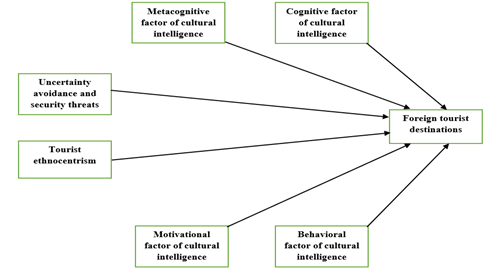
Figure 1 shows the research model that analyzes the influence of uncertainty avoidance and security threats, tourist ethnocentrism, and cultural intelligence on tourists’ decisions regarding the selection of foreign destinations.
Figure 1: Research model
Source: Authors’ research
3. Materials and methods
The research was completed in late 2024 in the Republic of Serbia using a survey method, with the participation of 608 people (Table 1).
Table 1: Demographic structure of the respondents
|
|
|
Number |
Percentage |
|
Gender |
Female |
288 |
47.4% |
|
Male |
320 |
52.6% |
|
|
Total |
608 |
100% |
|
|
Age |
Up to 19 years |
27 |
4.4% |
|
20-39 years |
241 |
39.6% |
|
|
40-59 years |
204 |
33.6% |
|
|
60 years and older |
136 |
22.4% |
|
|
Total |
608 |
100% |
|
|
Education |
Primary education |
21 |
3.5% |
|
High school |
284 |
46.7% |
|
|
University degree |
303 |
49.8% |
|
|
Total |
608 |
100% |
|
|
Monthly incomes |
Up to 90,000 dinars |
216 |
35.5% |
|
91,000-120,000 dinars |
174 |
28.6% |
|
|
121,000 dinars and more |
218 |
35.9% |
|
|
Total |
608 |
100% |
Source: Authors’ research
Respondents rated the statements related to the variables on a scale from 1 to 7 (Table 2) and SmartPLS 4 software was used for statistical data processing.
Table 2: Variables and statements
|
Variables |
Statements |
Source |
|
Uncertainty avoidance and security threats |
1. It is necessary to specify everything precisely and define it clearly. 2. I avoid traveling to countries where there is a threat of terrorist attacks. 3. I do not prefer to travel to countries affected by political instability and social unrest. |
Adapted to: Hofstede (2001); Agrawal et al. (2021); |
|
Tourist ethnocentrism |
1. I spend my vacation at domestic destinations. 2. Spending money at domestic tourist destinations has a positive impact on the national economy. 3. My country has many beautiful tourist destinations, which I prefer over traveling abroad. |
Adapted to: Shimp & Sharma (1987) |
|
Metacognitive factor of cultural intelligence |
1. I try to improve my cultural understanding. 2. I am open to accepting ideas that come from other cultures. 3. I have cosmopolitan views and thinking. |
Adapted to: Zdravković & Peković (2021) |
|
Cognitive factor of cultural intelligence |
1. I know the legal norms of other countries. 2. I know the history of other countries. 3. I speak some foreign languages (English, French, or Italian). |
Adapted to: |
|
Motivational factor of cultural intelligence |
1. I am enthusiastic about visiting foreign tourist destinations. 2. I like talking to people from different cultures. 3. I visit museums, operas, and architectural landmarks in other countries. |
Adapted to: |
|
Behavioral factor of cultural intelligence |
1. I can adapt to multicultural situations. 2. I can adjust my accent and tone throughout intercultural conversations. 3. I can adjust my body language throughout intercultural conversations. |
Adapted to: |
|
Foreign tourist destinations |
1. I love to spend my vacation in a foreign tourist destination. 2. Exploring other cultures is stepping out of the comfort zone and experiencing authentic moments. 3. Money spent on visiting exotic tourist destinations is a good investment. |
Adapted to: Coves-Martínez et al. (2022); |
Source: Authors’ research
4. Results and discussion
Table 3 presents the results of the validity tests, with parameters indicating the relevance of the research model.
Table 3: Model validity analysis
|
Indicators of model validity |
Research model – Foreign tourist destinations |
Desirable value |
|
χ2/df |
1.954 |
<3 |
|
GFI |
0.903 |
>0.9 |
|
IFI |
0.911 |
>0.9 |
|
TLI |
0.921 |
>0.9 |
|
CFI |
0.933 |
>0.9 |
|
RMSEA |
0.036 |
<0.08 |
Source: Authors’ research
The assessment of model validity indicates satisfactory fit indices. The χ²/df value of 1.954 is below the recommended threshold of 3, suggesting good model fit (Bagozzi & Yi, 1998). Other fit measures further support this conclusion, with GFI = 0.903, IFI = 0.911, TLI = 0.921, and CFI = 0.933, all exceeding the accepted cutoff of 0.90 and indicating adequate structural alignment of the model (Byrne, 1998). Moreover, the RMSEA value of 0.036 is well below the threshold of 0.08, confirming excellent model fit with minimal approximation error (Hair et al., 2006). Overall, all indices fall within acceptable statistical limits. Reliability analysis was conducted to test whether there is an corresponding level of correlation among the statements used to measure the variables (Table 4).
Table 4: Reliability analysis
|
Research variables |
Cronbach’s alpha (desirable value >0.70) |
Composite reliability (desirable value >0.70) |
Average Variance Extracted (desirable value >0.50) |
|
Uncertainty avoidance and security threats |
0.793 |
0.826 |
0.657 |
|
Tourist ethnocentrism |
0.857 |
0.864 |
0.635 |
|
Metacognitive factor of cultural intelligence |
0.868 |
0.879 |
0.711 |
|
Cognitive factor of cultural intelligence |
0.739 |
0.744 |
0.659 |
|
Motivational factor of cultural intelligence |
0.847 |
0.861 |
0.698 |
|
Behavioral factor of cultural intelligence |
0.734 |
0.828 |
0.677 |
|
Foreign tourist destinations |
0.850 |
0.858 |
0.735 |
Source: Authors’ research
The assessment of internal consistency and convergent validity confirmed the adequacy of the measurement model. All constructs showed Cronbach’s alpha values above the recommended threshold of 0.70 (0.734–0.868), while composite reliability (CR) values also exceeded 0.70, ranging from 0.744 to 0.879. In addition, Average Variance Extracted (AVE) values surpassed the cutoff of 0.50 for all constructs (0.635–0.735), indicating satisfactory convergent validity. Overall, the results demonstrate that the measurement model meets the recommended psychometric standards and is suitable for subsequent structural analysis (Hair et al., 2006).
SEM analysis was applied to analyze the influence of uncertainty avoidance and security threats, tourist ethnocentrism, and cultural intelligence on tourists’ decisions regarding the selection of foreign destinations (Table 5).
Table 5: SEM model – dependent variable: foreign tourist destinations
|
Hypothesis |
Original sample |
Standard deviation |
T statistics |
P values |
|
Uncertainty avoidance and security threats
Foreign destinations |
-0.216 |
0.084 |
2.569 |
0.010** |
|
Tourist ethnocentrism
Foreign destinations |
-0.365 |
0.102 |
3.577 |
0.000** |
|
Metacognitive factor of cultural intelligence
Foreign destinations |
0.422 |
0.087 |
4.823 |
0.000** |
|
Cognitive factor of cultural intelligence
Foreign destinations |
0.194 |
0.069 |
2.802 |
0.005** |
|
Motivational factor of cultural intelligence
Foreign destinations |
0.318 |
0.070 |
4.518 |
0.000** |
|
Behavioral factor of cultural intelligence
Foreign destinations |
0.480 |
0.094 |
5.093 |
0.000** |

Note: **0.01; R square=0.538
Source: Authors’ research
R square is 0.538, which indicates that 53.8% of tourists’ decisions regarding the visit of a foreign destination are explained by the independent variables. Uncertainty avoidance and security threats (coefficient= -0.216, p =0.010) and tourist ethnocentrism (coefficient= -0.365, p =0.000) have a significate negative impact on the choice of foreign destinations, confirming research hypotheses H1 and H2. Cultural intelligence through metacognitive (coefficient= 0.422, p =0.000), cognitive (coefficient= 0.194, p =0.005), motivational (coefficient= 0.318, p =0.000), and behavioral factors (coefficient= 0.480, p =0.000) has a significant positive impact on the choice of foreign destinations, confirming research hypotheses H3a, H3b, H3c, and H3d.
Bootstrap Multigroup Analysis (MGA) is a nonparametric technique within the PLS-SEM framework used to compare structural relationships across independent respondent groups. Prior studies highlight its relevance for identifying statistically significant differences in path coefficients across demographic segments such as nationality, gender, education, and income (Cheah et al., 2023; Troiville et al., 2025). Accordingly, MGA is widely recommended in socio-economic and marketing research for testing moderating effects of demographic variables and has been successfully applied in tourism-related studies, including analyses of ethnocentrism and xenocentrism among diverse consumer groups (Cucato et al., 2025).
Bootstrap Multigroup Analysis (MGA) was implemented to examine whether there are statistically significant differences in the impact of uncertainty avoidance and security threats, tourist ethnocentrism, and cultural intelligence on the visit of foreign destinations by the respondents based on the demographic characteristic of education. (Table 6).
Table 6: MGA – Education
|
Relations |
Coefficient (faculty) |
Coefficient (high school) |
Difference (absolute) |
P values |
|
Uncertainty avoidance and security threats
Foreign destinations |
-0.189 |
-0.334 |
0.145 |
0.000** |
|
Tourist ethnocentrism
Foreign destinations |
-0.244 |
-0.412 |
0.168 |
0.000** |
|
Metacognitive factor of cultural intelligence
Foreign destinations |
0.486 |
0.311 |
0.175 |
0.000** |
|
Cognitive factor of cultural intelligence
Foreign destinations |
0.298 |
0.185 |
0.113 |
0.008** |
|
Motivational factor of cultural intelligence
Foreign destinations |
0.298 |
0.265 |
0.033 |
0.587 |
|
Behavioral factor of cultural intelligence
Foreign destinations |
0.517 |
0.359 |
0.158 |
0.000** |
Note: **0.01
Source: Authors’ research
The negative effects of uncertainty avoidance and security threats (difference = 0.145; p = 0.000) and tourist ethnocentrism (difference = 0.168; p = 0.000) on foreign destination choice are stronger among respondents with a high school education than among those with a faculty education, supporting hypotheses H4a and H4b. In contrast, the positive effects of cultural intelligence – metacognitive (difference = 0.175; p = 0.000), cognitive (difference = 0.113; p = 0.008), and behavioral (difference = 0.158; p = 0.000) – are more pronounced among respondents with a faculty education, confirming hypotheses H4c, H4d, and H4f. The motivational dimension shows no statistically significant difference (difference = 0.033; p = 0.587), leading to the rejection of H4e.
Bootstrap Multigroup Analysis (MGA) was also implemented to determine whether there are statistically significant differences in the impact of uncertainty avoidance and security threats, tourist ethnocentrism, and cultural intelligence on the choice of foreign destinations by the respondents in terms of the criterion demographic characteristic of monthly income. The results are presented in Table 7.
Table 7: MGA- Monthly income
|
Relations |
Coefficient (121 000 dinars and more) |
Coefficient (up to 90 000 dinars) |
Difference (absolute) |
P values |
|
Uncertainty avoidance and security threats
Foreign destinations |
-0.177 |
-0.318 |
0.141 |
0.001** |
|
Tourist ethnocentrism
Foreign tourist destinations |
-0.214 |
-0.395 |
0.181 |
0.000** |
|
Metacognitive factor of cultural intelligence
Foreign destinations |
0.448 |
0.295 |
0.153 |
0.000** |
|
Cognitive factor of cultural intelligence
Foreign destinations |
0.311 |
0.199 |
0.112 |
0.007** |
|
Motivational factor of cultural intelligence
Foreign destinations |
0.415 |
0.269 |
0.146 |
0.000** |
|
Behavioral factor of cultural intelligence
Foreign destinations |
0.505 |
0.468 |
0.037 |
0.497 |
Note: **0.01
Source: Authors’ research
The negative effects of uncertainty avoidance and security threats (difference = 0.141; p = 0.001) and tourist ethnocentrism (difference = 0.181; p = 0.000) on foreign destination choice are stronger among respondents with a monthly income of up to 90,000 dinars than among those earning 121,000 dinars or more, supporting hypotheses H5a and H5b. Conversely, the positive effects of cultural intelligence – metacognitive (difference = 0.153; p = 0.000), cognitive (difference = 0.112; p = 0.007), and motivational (difference = 0.146; p = 0.000) – are more pronounced among higher-income respondents, confirming hypotheses H5c, H5d, and H5e. No statistically significant difference is observed for the behavioral dimension (difference = 0.037; p = 0.497), leading to the rejection of H5f.
Discussion of results
Uncertainty avoidance combined with security threats negatively affects tourists’ choice of foreign destinations, while tourist ethnocentrism reinforces preferences for domestic travel, confirming H1 and H2. These findings align with prior research on uncertainty, security risks, and ethnocentrism in tourism (Harrington, 2021; Isaac & Velden, 2018; Kucukkomurler & Ozkan, 2022; Amani, 2024; Bremser & Abraham, 2024; Cucato et al., 2025; Maro et al., 2023; Stepchenkova et al., 2019). In contrast, cultural intelligence positively influences intentions to visit foreign destinations across all its dimensions – metacognitive, cognitive, motivational, and behavioral – confirming H3a, H3b, H3c, and H3d, consistent with earlier studies emphasizing cultural openness and cosmopolitanism (Chatterjee et al., 2022; Coves-Martínez et al., 2022; Mandić et al., 2025; Nazir, 2023).
Regarding demographics, higher levels of uncertainty avoidance and security threats, and tourist ethnocentrism are observed among respondents with lower education and income, supporting H4a, H4b, H5a, and H5b. Conversely, the effects of cultural intelligence are stronger among university-educated respondents through metacognitive, cognitive, and behavioral dimensions (H4c, H4d, H4f), with no significant differences for the motivational dimension (H4e not supported). Similarly, higher-income respondents exhibit stronger effects through metacognitive, cognitive, and motivational dimensions (H5c, H5d, H5e), while no differences are found for the behavioral dimension (H5f not supported). Overall, these results are consistent with previous evidence on demographic differences in tourist decision-making (Cucato et al., 2025; Gedecho et al., 2023; Khan & Jin, 2024; Liao et al., 2025; Zdravković & Peković, 2021).
5. Conclusion
This study examines the effects of uncertainty avoidance and security threats, tourist ethnocentrism, and cultural intelligence on international destination choice in the context of recent geopolitical crises, including the COVID-19 pandemic and the Russia–Ukraine conflict. Grounded in Social Identity Theory and Social Conflict Theory, the findings show that crisis conditions intensify ethnocentric tendencies and risk-averse behavior, thereby constraining foreign travel intentions, while cultural intelligence mitigates these effects by enhancing tourists’ ability to manage uncertainty, perceived risk, and cultural distance. The originality of this research lies in the development of an integrative conceptual model that jointly incorporates psychological predispositions, macro-level disruptions, and socio-demographic characteristics. Unlike prior studies that examined these factors in isolation, this study explains destination choice as the outcome of their interaction. By conceptualizing cultural intelligence not only as an intercultural competence but also as a resilience-enhancing mechanism, the research extends existing models of tourist behavior and bridges micro-level psychological processes with macro-level crisis contexts. From a practical perspective, the findings provide important implications for tourism marketers and policymakers. Risk-reduction strategies – such as targeted communication, real-time safety information, digital reassurance tools, and personalized messaging aligned with tourists’ education and income levels – can strengthen confidence in international travel. Emphasizing cultural heritage, historical narratives, architectural landmarks, traditions, and symbolic destination attributes may further enhance destination appeal under heightened uncertainty. The study is limited by data collected exclusively in the Republic of Serbia, which restricts generalizability. Future research should adopt cross-cultural and longitudinal designs and incorporate additional variables such as cosmopolitanism, xenocentrism, consumer animosity, social media influence, institutional trust, or other Hofstede cultural dimensions to further advance understanding of international destination choice during prolonged crisis conditions.
CRediT author statement
Žaklina Spalević: Conceptualization, Methodology, Formal analysis, Writing – original draft, Writing – review and editing. Stefan Zdravković: Data curation, Investigation, Formal analysis, Validation, Writing – original draft, Supervision, Writing – review and editing. Hristina Milojković: Project administration, Software, Writing – review and editing.
Declaration of generative AI in the writing process
During the preparation of this work the authors did not use generative AI and AI-assisted technologies in the writing process.
Conflict of interest
The authors declare no conflict of interest concerning this submitted work.
References
1. Abbas, H. S. M., & Xu, X. (2024). Topical dynamics of terrorism from a global perspective and a call for action on global risk. International Journal of Disaster Risk Reduction, 110, 104659. https://doi.org/10.1016/j.ijdrr.2024.104659
2. Agarwal, S., Page, S. J., & Mawby, R. (2021). Tourist security, terrorism risk management and tourist safety. Annals of Tourism Research, 89, 103207. https://doi.org/10.1016/j.annals.2021.103207
3. Amani, D. (2024). Destination promotional videos and tourism ethnocentrism in emerging tourism destinations: Is there a link? SAM Advanced Management Journal, 89(3), 201–223. https://doi.org/10.1108/SAMAMJ-05-2024-0024
4. Bagozzi, R. P., & Yi, Y. (1988). On the evaluation of structural equation model. Journal of the Academy of Marketing Science, 16(1), 74–94. https://doi.org/10.1007/bf02723327
5. Battikh, J. Y., Bodolica, V., & Wood, M. O. (2022). Disasters triggered by natural hazards and terrorism: A bibliometric network analysis into the intellectual structure of across-disciplinary research field. International Journal of Disaster Risk Reduction, 77, 103045. https://doi.org/10.1016/j.ijdrr.2022.103045
6. Bremser, K., & Abraham, V. (2024). Exploring the influence of tourist ethnocentrism and risk perception on the hospitality and tourism industry. EuroMed Journal of Business, 19(2), 157–176. https://doi.org/10.1108/EMJB-09-2021-0137
7. Byrne, B. M. (1998). Structural equation modeling with LISREL, PRELIS, and SIMPLIS: Basic concepts, applications, and programming. Hillsdale, NJ: Lawrence Erlbaum.
8. Chatterjee, S., Chaudhuri, R., & Vrontis, D. (2022). Examining the role of cross-cultural factors in the international market on customer engagement and purchase intention. Journal of International Management, 28(3), 100966. https://doi.org/10.1016/j.intman.2022.100966
9. Cheah, J.-H., Amaro, S., & Roldán, J. L. (2023). Multigroup analysis of more than two groups in PLS-SEM: A review, illustration, and recommendations. Journal of Business Research, 156, 113539. https://doi.org/10.1016/j.jbusres.2022.113539
10. Chi, N. T. K., & Phuong, V. H. (2022). Studying tourist intention on city tourism: The role of travel motivation. International Journal of Tourism Cities, 8(2), 497–512. https://doi.org/10.1108/IJTC-03-2021-0042
11. Coves-Martínez, A. L., Sabiote-Ortiz, C. M., & Frías-Jamilena, D. M. (2022). Cultural intelligence as an antecedent of satisfaction with the travel app and with the tourism experience. Computers in Human Behavior, 127, 107049 https://doi.org/10.1016/j.chb.2021.107049
12. Cucato, J. d. S. T., Strehlau, V. I., Bizarrias, F. S., & Strehlau, S. (2025). The polycentric consumer in tourism: Ethnocentrism and xenocentrism profiles’ interplay with authenticity in tourists’ destination choices. Journal of Hospitality and Tourism Insights, 8(6), 2277–2295. https://doi.org/10.1108/JHTI-05-2024-0532
13. Earley, P. C., & Ang, S. (2003). Cultural intelligence: Individual interactions across cultures. Palo Alto, CA: Stanford University Press.
14. Eddyono, F., Darusman, D., Sumarwan, U., & Sunarminto, T. (2025). Optimization model: The innovation and future of e-ecotourism for sustainability. Journal of Tourism Futures, 11(1), 96–113. https://doi.org/10.1108/JTF-03-2021-0067
15. Frias-Jamilena, D. M., Sabiote-Ortiz, C., Martin-Santana, J., & Beerli-Palacio, A. (2018). The effect of cultural intelligence on consumer-based destination brand equity. Annals of Tourism Research, 72, 22–36. https://doi.org/10.1016/j.annals.2018.05.009
16. Gedecho, E. K., Chua, B. L., Kim, S., Kim, B., & Han, H. (2023). Hawker culture ethnocentrism: Building an integrative framework for consumer intention toward hawker centers. Journal of Hospitality and Tourism Management, 56, 336–346. https://doi.org/10.1016/j.jhtm.2023.07.011
17. Hair, J. F., Black, B., Babin, B., Anderson, R. E., & Tatham, R. L. (2006). Multivariate Data Analysis (6th ed.), Upper Saddle River, NJ: Prentice Hall.
18. Harrington, R. D. (2021). Natural disasters, terrorism, and civil unrest: Crises that disrupt the tourism and travel industry-a brief overview. Worldwide Hospitality and Tourism Themes, 13(3), 392–396. https://doi.org/10.1108/WHATT-01-2021-0008
19. Hofstede Insights (2024). The culture factor group. Retrieved October 29, 2025 from https://www.theculturefactor.com/country-comparison-tool
20. Hofstede, G. (2001). Culture’s consequences: Comparing values, behaviours, institutions, and organizations across nations (2nd ed.), Sage, Thousand Oaks, CA.
21. Huang, T. Y., Jordan, E. J., Boley, B., Woosnam, K. M., Xiao, X., Maruyama, N., & Rojas, C. (2024). Rebuilding international tourism after a pandemic: Using Hofstede’s cultural dimensions to identify markets with lower pandemic-related travel risks. Journal of Destination Marketing and Management, 31, 100855. https://doi.org/10.1016/j.jdmm.2024.100855
22. Isaac, R. K., & Van den Bedem, A. (2021). The impacts of terrorism on risk perception and travel behaviour of the Dutch market: Sri Lanka as a case study. International Journal of Tourism Cities, 7(1), 63–91. https://doi.org/10.1108/IJTC-06-2020-0118
23. Isaac, R. K., & Velden, V. (2018). The German source market perceptions: How risky is Turkey to travel to? International Journal of Tourism Cities, 4(4), 429–451. https://doi.org/10.1108/IJTC-11-2017-0057
24. Jang, H., Kim, D., Kim, H., & Jang, L.C. (2025). Applications of Hofstede’s cultural dimensions in 50 countries using TFN-generalized Choquet integrals. Applied Soft Computing Journal, 172, 112875 https://doi.org/10.1016/j.asoc.2025.112875
25. Jankova, L., Auzina, A., & Zvirbule, A. (2023). Regional smart cultural tourism destinations in a region of Latvia. Worldwide Hospitality and Tourism Themes, 15(5), 507–516. https://doi.org/10.1108/WHATT-06-2023-0082
26. Khan, H. U. (2024). An analytical investigation of consequences of terrorism in the Middle East. Journal of Economic Criminology, 4, 100067. https://doi.org/10.1016/j.jeconc.2024.100067
27. Khan, M. H., & Jin, J. (2024). The relationship between ethnocentric behaviour and workforce localisation success: The mediating role of knowledge sharing tendency. European Research on Management and Business Economics, 30(2), 100245. https://doi.org/10.1016/j.iedeen.2024.100245
28. Krüger, T., Hoffmann, S., Nibat, I. N., Mai, R., Trendel, O., Gorg, H., & Lasarov, W. (2024). How consumer animosity drives anti-consumption: A multi-country examination of social animosity. Journal of Retailing and Consumer Services, 81, 103990. https://doi.org/10.1016/j.jretconser.2024.103990
29. Kucukkomurler, S., & Ozkan, T. (2022). Political interest across cultures: The role of uncertainty avoidance and trust. International Journal of Intercultural Relations, 91, 88–96. https://doi.org/10.1016/j.ijintrel.2022.09.004
30. Lakhoua, C., Temessek, A., & Baccouche, M. K. (2021). Image formation in a destination threatened by terrorism: Understanding the role of motivations. Qualitative Market Research, 24(4), 555–577. https://doi.org/10.1108/QMR-02-2020-0018
31. Lazarević, S., & Stanišić, T. (2023). The impact of global crises on international tourism in the Southern and Mediterranean Europe. Hotel and Tourism Management, 11(2), 103–115. https://doi.org/10.5937/menhottur2302103L
32. Lee, I. -C., Lin, C. Y. Y., & Lin, T. -Y. (2017). The creation of national intellectual capital from the perspective of Hofstede’s national culture. Journal of Intellectual Capital, 18(4), 807–831. https://doi.org/10.1108/JIC-11-2016-0117
33. Li Y., Guo, Z., Hua, H., & Li, W. (2024). An empirical analysis of cultural differences in overseas tourism: How do they affect self-determination theory (SDT) needs by age? International Journal of Intercultural Relations, 99, 101936. https://doi.org/10.1016/j.ijintrel.2024.101936
34. Liao, Z., Pang, Q., & Xiao, H. (2025). Glocalization: Cross-cultural communication of tourism research. Tourism Management, 108, 105129. https://doi.org/10.1016/j.tourman.2024.105129
35. MacNab, B. R., & Worthley, R. (2007). Culture typing versus sample specific accuracy: An examination of uncertainty avoidance, power distance, and individualism for business professionals in the U.S. and Canada. Multinational Business Review, 15(3), 1–24. https://doi.org/10.1108/1525383X200700010
36. Mandić, A., Petrić, L., & Pivčević, S. (2025). Harmonizing sustainability and resilience in post-crisis cultural tourism: Stakeholder insights from the Split metropolitan area living lab. Tourism Management Perspectives, 55, 101331. https://doi.org/10.1016/j.tmp.2024.101331
37. Maro, Z. M., Balogh, P., Czine, P., & Torok, A. (2023). The roles of geographic indication and ethnocentrism in the preferences of Central European spirit consumers: The case of palinka. Food Quality and Preference, 108, 104878. https://doi.org/10.1016/j.foodqual.2023.104878
38. Minkov, M., & Kaasa, A. (2022). Do dimensions of culture exist objectively? A validation of the revised Minkov-Hofstede model of culture with World values survey items and scores for 102 countries. Journal of International Management, 28(4), 100971. https://doi.org/10.1016/j.intman.2022.100971
39. Nazir, F. (2023). Destination branding through social media: juxtaposition of foreign influencer’s narratives and state’s presentation on the event of Pakistan Tourism Summit 2019. Qualitative Market Research, 26(4), 428–448. https://doi.org/10.1108/QMR-03-2022-0048
40. Noor, M. E. Mirza, E., & Rana, I. A. (2024). A systematic review of urban terrorism literature: Root causes, thematic trends, and future directions. Journal of Safety Science and Resilience, 5(3), 249–265. https://doi.org/10.1016/j.jnlssr.2024.03.006
41. Poulova, P., Wang, H., Lin, S., Wu, X., Tehseen, S., & Liu, X. (2024). Impact of Hofstede’s cultural dimensions on sustainable competitive advantage: The mediating role of entrepreneurial innovativeness among Malaysian ethnic entrepreneurs. Acta Psychologica, 251, 104538. https://doi.org/10.1016/j.actpsy.2024.104538
42. Preko, A., & Gyepi-Garbrah, T.F. (2023). Understanding sense of safety and trustworthiness of tourism information among migrant visitors. International Hospitality Review, 37(1), 143–160. https://doi.org/10.1108/IHR-04-2021-0029
43. Radojević, T., Stanišić, N., & Stanić, N. (2024). How culture shapes the restaurant experience: A study of Hofstede’s dimensions and service quality. Hotel and Tourism Management, 12(1), 43–59. https://doi.org/10.5937/menhottur2400009R
44. Ragab, H., Polo-Peña, A. I., & Mahrous, A. A. (2023). Airline travellers’ ethnocentric tendencies and their impact on travellers’ behaviours: Extending consumer ethnocentrism to airline services. Tourism Management Perspectives, 49, 101200. https://doi.org/10.1016/j.tmp.2023.101200
45. Shimp, T. A., & Sharma, S. (1987). Consumer ethnocentrism: Construction and validation of CETSCALE. Journal of Marketing Research, 24(3), 280–289. https://doi.org/10.2307/3151638
46. Stepchenkova, S., Kirilenko, A. P., & Shichkova, E. (2019). Influential factors for intention to visit an adversarial nation: Increasing robustness and validity of findings. International Journal of Tourism Cities, 5(3), 491–510. https://doi.org/10.1108/IJTC-11-2018-0085
47. Sun, Y., Gonzalez-Jimenez, H., & Wang, S. (2021). Examining the relationships between e-WOM, consumer ethnocentrism and brand equity. Journal of Business Research, 130, 564–573. https://doi.org/10.1016/j.jbusres.2019.09.040
48. Tang, P., & Zhang, J. (2025). How cultural differences affect outbound tourism demand? Journal of Hospitality and Tourism Management, 62, 128–134. https://doi.org/10.1016/j.jhtm.2025.01.007
49. Tomić Maksan, M., Kovačić, D., & Cerjak, M. (2019). The influence of consumer ethnocentrism on purchase of domestic wine: Application of the extended theory of planned behaviour. Appetite, 142, 104393. https://doi.org/10.1016/j.appet.2019.104393
50. Troiville, J., Moisescu, O. I., & Radomir, L. (2025). Using necessary condition analysis to complement multigroup analysis in partial least squares structural equation modeling. Journal of Retailing and Consumer Services, 82, 104018. https://doi.org/10.1016/j.jretconser.2024.104018
51. Wang, L., Wong, P. P. W., & Zhang, Q. (2021). Travellers’ destination choice among university students in China amid COVID-19: Extending the theory of planned behaviour. Tourism Review, 76(4), 749–763. https://doi.org/10.1108/TR-06-2020-0269
52. Zaman, U., & Aktan, M. (2021). Examining residents’ cultural intelligence, place image and foreign tourist attractiveness: A mediated-moderation model of support for tourism development in Cappadocia (Turkey). Journal of Hospitality and Tourism Management, 46, 393–404. https://doi.org/10.1016/j.jhtm.2021.01.017
53. Zdravković, S., & Peković, J. (2021). Cultural intelligence and heritage impact on choosing foreign tourist destination. Hotel and Tourism Management, 9(1), 27–42. https://doi.org/10.5937/menhottur2101027Z
54. Zhang, Y., Shao, W., & Thaichon, P. (2021). Investigating tourist post-travel evaluation and behavioural intention: A cultural intelligence perspective. Asia Pacific Journal of Marketing and Logistics, 33(10), 2037–2053. https://doi.org/10.1108/APJML-08-2020-0584
55. Zhang, Y., Xiong, P., Rong, S., Frost, M., & Zhou, W. (2024). Knowledge management of MNCs in the post-COVID era: the role of cultural intelligence and knowledge-oriented leadership. Journal of Knowledge Management, 28(8), 2141–2168. https://doi.org/10.1108/JKM-03-2023-0189
56. Zheng, F., Zhao, C., Yasmin, F., & Sokolova, M. (2025). Hofstede’s cultural dimensions and proactive behavior as the antecedents of entrepreneurial innovativeness. Acta Psychologica, 256, 104948. https://doi.org/10.1016/j.actpsy.2025.104948
