Original Scientific Paper 
UDC: 005.961:005.342]:338.486.3(4-12)
DOI: 10.5937/menhottur2500014L
Key attributes of tourism sector entrepreneurs in Southeast Europe
Bojan Leković1, Milenko Matić1[*], Sunčica Milutinović1
1 University of Novi Sad, Faculty of Economics in Subotica, Serbia
Abstract
Purpose – This study examines attributes of tourism sector entrepreneurs, identifying characteristics of individuals belonging to this entrepreneurial group in Southeast Europe. Methodology – The research is based on the GEM database from 2020, which includes Croatia, Greece and Slovenia. Binary logistic regression was performed using the SPSS software package. Findings – The findings reveal that younger individuals and those with higher incomes are more likely to engage in entrepreneurial activity within the tourism sector. Opportunity perception and entrepreneurial proactivity have the same effect, whereas necessity-driven motives are negatively related to entrepreneurial activity in the tourism sector. Entrepreneurs with lower growth expectations or those oriented toward internationalization, particularly those with higher export income, are more likely to be involved in tourism. Conversely, the use of new technologies and innovative procedures is negatively associated with entrepreneurial activity in this sector. Implications – These findings have important implications for the creation of policies that can encourage the development of tourism as a strategic sector, including targeted training of entrepreneurs and support programs that would encourage investment and innovation in tourism.
Keywords: entrepreneurs, tourism, attributes, Southeast Europe
JEL classification: L26
Ključni atributi preduzetnika u sektoru turizma u Jugoistočnoj Evropi
Sažetak
Svrha – Ova studija ispituje atribute preduzetnika u sektoru turizma, identifikujući karakteristike pojedinaca koji pripadaju ovoj preduzetničkoj grupi u Jugoistočnoj Evropi. Metodologija – Istraživanje se zasniva na GEM bazi podataka iz 2020. godine, koja obuhvata Hrvatsku, Grčku i Sloveniju. Primenjena je binarna logistička regresija korišćenjem softverskog paketa SPSS. Rezultati – Nalazi pokazuju da su mlađi pojedinci i oni sa višim prihodima skloniji uključivanju u preduzetničke aktivnosti u sektoru turizma. Percepcija prilika i preduzetnička proaktivnost imaju isti efekat, dok su motivi zasnovani na nuždi negativno povezani sa preduzetničkom aktivnošću u sektoru turizma. Preduzetnici sa nižim očekivanjima rasta ili oni orijentisani ka internacionalizaciji, posebno sa višim prihodima od izvoza, verovatnije će biti uključeni u turizam. Nasuprot tome, korišćenje novih tehnologija i inovativnih procedura negativno je povezano sa preduzetničkom aktivnošću u ovom sektoru. Implikacije – Ovi nalazi imaju važne implikacije za kreiranje politika koje mogu podstaći razvoj turizma kao strateškog sektora, uključujući ciljane obuke preduzetnika i programe podrške koji bi podstakli ulaganja i inovacije u turizmu.
Klјučne reči: preduzetnici, turizam, atributi, Jugoistočna Evropa
JEL klasifikacija: L26
1. Introduction
Entrepreneurship is a key driver of economic growth and development, as it contributes to the creation of new jobs, innovations and improving competitiveness on the global market (Acs et al., 2008). In the last decades, entrepreneurship has been increasingly seen as one of the basic factors for stimulating economic dynamism, especially in transition and developing countries (Zarkua et al., 2025). Encouraging entrepreneurial activities has a strong impact on various sectors, and one of the most important among them is tourism (Heidari et al., 2014). Tourism has the potential to generate large economic benefits, not only through direct revenues, but also through wider effects on infrastructure, local communities and cultural heritage protection (Banerjee et al., 2017; Silva et al., 2022). Southeastern European countries, such as Slovenia, Croatia and Greece, provide excellent examples of how entrepreneurship can be key to tourism development (Gregoric et al., 2016; OECD, 2025). These countries have developed into popular tourist destinations, not only a result of their natural and cultural resources, but also due to the ability of entrepreneurs to recognize opportunities and create competitive products and services. In 2023, tourism accounted for a significant portion of gross domestic product (GDP) in these countries. For example, in Slovenia, tourism accounted for 9.8% of GDP, while in Croatia that percentage was even 25.8%, and in Greece 19.2% (Statista, 2023). These data clearly indicate the importance of tourism for the economy of Southeast European countries and show how important it is to analyze entrepreneurs in this sector. Understanding their determinants enables the identification of key factors that drive entrepreneurial activities in tourism, which opens space for their encouragement and support. By identifying and analyzing entrepreneurs in tourism, as well as the factors that influence their success, it is possible to develop strategies that will contribute to the sustainable growth of this sector.
Tourism constitutes a significant part of the global economy and plays an important role in the development of local economies, especially through small and medium-sized enterprises that encourage regional development and the preservation of cultural values. Its role is particularly pronounced in developing countries and in rural areas where other industries are poorly developed. In addition, tourism contributes to the preservation of natural resources and cultural heritage through various forms of entrepreneurial initiatives (Andereck & Nyaupane, 2010). The study of entrepreneurship in tourism has gradually developed over the past few decades. The first papers on this topic were published in the 1970s in the field of business economics, but the real development begins later when studies in the field of entrepreneurship expand (Carmichael & Morrison, 2011). Ateljevic and Li (2009) pointed out that in the period from 1986 to 2006, only 2% of articles in leading tourism journals were devoted to entrepreneurship. Entrepreneurship in tourism was primarily viewed as a lifestyle sector, i.e. a sector that enables entrepreneurs to balance business activities and quality of life (Ratten, 2020). In the last two decades, interest in entrepreneurship in tourism has been growing. Recent works in this area deal with the role of entrepreneurs in tourism, growth and development strategies of existing companies and the importance of entrepreneurship at the regional level. Researchers mainly focus on small family businesses (Hallak et al., 2014), as well as the importance of education and training of tourism entrepreneurs to maintain a competitive position (Wang et al., 2019). To further develop the theory of entrepreneurship and tourism, deeper research and systematic linking of results are needed.
The structure of the paper is as follows. The theoretical framework is based on a review of relevant literature in the field. It begins with an analysis of how demographic factors affect tourism entrepreneurship. This is followed by an examination of motivational factors (focusing on two distinct groups of motives), perceptual variables, growth aspirations, internationalization and usage of new technology. Additionally, the methodology and findings of the statistical analysis, conducted using binary logistic regression, are presented. The paper concludes with a discussion of the results, final remarks outlining the study’s contributions and limitations, and suggestions for future research.
2. Literature review
Demographic factors such as age and incomes are key to understanding entrepreneurial decisions (Barrera-Verdugo et al., 2023). Entrepreneurship in tourism is specific due to its strong focus on regional development and the preservation of local cultural values, which distinguishes it from other sectors (Dias & Silva, 2021). Research shows that demographic factors in tourism influence not only the decision to start a business, but also the way entrepreneurs manage their business (Matić et al., 2023; Murniati et al., 2021). For example, older entrepreneurs in rural areas often start businesses out of a personal passion for the nature and community, while younger entrepreneurs invest in digital strategies such as online marketing and digital transformation (Schweinsberg et al., 2020). The older population also uses the capital acquired in previous careers to invest in tourism ventures, especially in the areas of accommodation and services (Montañés-Del-Río & Medina-Garrido, 2020). The financial situation also plays a key role in tourism. Research by Montañés-Del-Río and Medina-Garrido (2020) shows that entrepreneurs with higher incomes are more likely to invest in highly competitive segments of tourism, such as luxury accommodation and specialized tourism activities, while those with lower incomes tend to start businesses in the sector of affordable services, which reduces initial costs. Based on the observed factors, the following hypothesis was put forward:
H1: There is a statistically significant relationship between demographic factors such as age and incomes and involvement in entrepreneurial activities in the tourism sector in Southeast Europe.
H1.1. Individuals in older age groups are more likely to be involved in entrepreneurial ventures in the tourism sector in Southeast Europe.
H1.2. Individuals from households with higher incomes are more likely to be involved in entrepreneurial activities in the tourism sector in Southeast Europe.
Perceptual variables can be very significant in shaping entrepreneurial behavior as they include attitudes and beliefs that influence decision-making. Entrepreneurs exhibit heightened “opportunity sensitivity” (Kirzner, 1979), which enables them to spot opportunities that others miss. Proactivity in exploiting opportunities is directly related to higher entrepreneurial outcomes (Casson & Giusta, 2007; Ognjenović, 2024). Failure to act on recognized opportunities negatively affects success in entrepreneurship, confirming that proactivity is key to achieving results. This is particularly important in industries with high levels of risk and uncertainty, where opportunity perception and social support are key drivers of entrepreneurial activity (Farson & Keyes, 2006; Koellinger, 2008). In the tourism sector, market specificities, such as seasonal fluctuations and dynamic changes in tourist preferences, make opportunity perception and proactive action key to success. Based on the analysis of relevant factors, the following hypothesis is put forward:
H2: Entrepreneurs who perceive more entrepreneurial opportunities and demonstrate higher proactiveness in capitalizing on them are more likely to engage in the tourism sector in Southeast Europe.
Motivation can play an important role in shaping entrepreneurs’ decisions to enter certain sectors (Milutinović et al., 2023). Entrepreneurs’ motives of directly influence the type of businesses they start, their business strategies, and the long-term sustainability of their ventures (Wang et al., 2019). According to the Global Entrepreneurship Monitor (n.d.), entrepreneurs can be motivated by various factors, which can best be categorized into two groups: opportunity motives and necessity motives. Necessity motives are predominantly associated with entrepreneurs who engage in entrepreneurship due to a lack of other employment opportunities. These entrepreneurs start businesses to make a living and usually focus on the survival of their ventures. In this context, the specific characteristics of the tourism sector may play an important role in attracting precisely these entrepreneurial profiles. The tourism sector is characterized by a high degree of flexibility, seasonality, and openness to various forms of informal work (Power et al., 2017). This informal and flexible nature of the sector enables quick adaptation to local needs and conditions, which often suits entrepreneurs who are limited in resources and are looking for accessible and relatively easy entry points into the labour market. Therefore, tourism emerges as an attractive option for those who enter entrepreneurship out of necessity. Several studies support the link between necessity-driven motivation and sectoral choice. For instance, Williams and Williams (2014) highlight that necessity-driven entrepreneurs often seek sectors with low entry barriers, minimal startup capital, and high labor demand – characteristics that closely match the tourism industry. Furthermore, research by Nikolaev et al. (2018) suggests that informal and flexible sectors are particularly attractive to necessity-driven individuals. Considering these findings and the specific attributes of the tourism sector, it can be assumed that necessity-driven entrepreneurs will more often recognize tourism as a favorable environment for starting a business.
H3: Entrepreneurs with necessity motives are more likely to engage in the tourism sector in Southeast Europe.
Entrepreneurs are market actors who should ensure continuous economic growth, economic strengthening and social well-being (Aparicio et al., 2016). Therefore, there is a great interest of economic policy makers to encourage entrepreneurial activity (Oyelola et al., 2013). To realize the full potential, it is necessary for entrepreneurs to strive for the growth of their business ventures. The decision to do so plays an important role in explaining the growth of the firm (Manolova et al., 2012). The growth expectations of an entrepreneurial venture are not only a reflection of their ambition but are an important indicator of the ability to adapt to market conditions and expand business opportunities. In the tourism sector, where opportunities are mostly short-term and seasonal, entrepreneurs with clear growth expectations cannot take full advantage of global trends (Beier & Wagner, 2017). These circumstances can deter entrepreneurs who strive for greater profitability and long-term stability. Some studies indicate that entrepreneurs in the tourism sector often operate in fragmented, small-scale businesses with relatively modest growth expectations (Badulescu et al., 2024). Similarly, research on rural tourism shows that growth expectations among these entrepreneurs are generally lower, with business activities focusing on sustainable, lifestyle-oriented development rather than rapid expansion (Cunha et al., 2020). These findings suggest that entrepreneurs with strong growth ambitions are more likely to choose other sectors with greater scalability potential, avoiding the tourism sector. The following hypothesis results from the previous analysis:
H4: Entrepreneurs with higher growth expectations are less likely to engage in the tourism sector in Southeast Europe.
Business internationalization plays an important role in entrepreneurial dynamics, enabling firms to access wider markets, diversify sources of income and increase competitiveness (Cavusgil et al., 2014). In the tourism sector, internationalization has specific characteristics because tourism functions as a form of “invisible export”, where foreign visitors bring income that boosts the local economy and contributes to the country’s economic growth (Brau et al., 2012). Entrepreneurs in tourism have a unique opportunity to increase the competitiveness of their business ventures through interaction with international markets, taking advantage of global trends and foreign investments (World Bank, 2024). Experience in international affairs and a high share of export income can contribute to a greater inclination of entrepreneurs towards the tourism sector, as they enable the use of existing networks and resources to attract foreign visitors (Neupane et al., 2025). At the same time, tourism requires entrepreneurs to understand the local market and cultural specificities (Lazović et al., 2024), which enables additional valorization of local resources through international consumption. These characteristics make tourism attractive for entrepreneurs who seek to expand their business through internationalization strategies, using tourism as a platform to connect local and global markets. Based on the analysis of previous research and the specifics of the tourism sector, hypothesis H5 was put forward.
H5: Entrepreneurs with stronger aspirations toward internationalization are more likely to engage in in the tourism sector in Southeast Europe.
Technological innovation is a key driver of entrepreneurial activity in various sectors, enabling more efficient processes, adapting to market demands and creating a competitive advantage (Schumpeter, 1934). However, in the tourism sector, specific market characteristics, such as high reliance on human resources, experience-oriented services and seasonal variations, often limit the application of technological innovations compared to other industries (Hjalager, 2010). Although technology can improve user experience and optimize operational processes (Milovanovic et al., 2022; Vuković et al., 2024), tourism entrepreneurs often focus on local specificities and cultural authenticity, which can reduce the need to implement advanced technological solutions (Buhalis & Law, 2008). This dynamic points to a complex relationship between innovation and entrepreneurship in tourism, where adaptation to local needs and traditional practices may have greater value than a high degree of technological sophistication. Considering the results of previous studies, hypothesis H6 was defined.
H6: Entrepreneurs who adopt new technologies are less likely to engage in the tourism sector in Southeast Europe.
3. Methodology
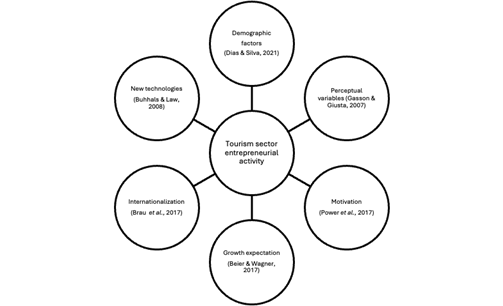
The aim of this research is to identify significant factors that influence the probability of involvement in early-stage entrepreneurial ventures in the tourism sector, identifying the key characteristics of individuals and businesses that belong to this specific entrepreneurial group in Southeast Europe. Data from the Global Entrepreneurship Monitor (GEM) database for the year 2020 were used for the analysis. The survey included the responses of entrepreneurs from Croatia, Slovenia and Greece, a total of 6,000 respondents, of whom 111 are in the tourism sector. The data were analyzed using the SPSS 18 software package. Binary logistic regression was used to identify factors that influence the probability of involvement in early-stage entrepreneurial ventures in the tourism sector, and to identify the key characteristics of individuals belonging to this specific entrepreneurial group. The results of the analysis provide a deeper understanding of the factors that encourage or limit entrepreneurial activity in tourism in the region of Southeast Europe. The dependent variable in the research is a binary categorical variable that was recoded to distinguish entrepreneurs from the tourism sector from those from other sectors (TEA: Industry ISIC version 4, 1-digit code). Respondents who are in the early stages of their entrepreneurial activity (Total Early-stage Entrepreneurial Activity – TEA) are included. The development of the research model is based on previous studies (Figure 1). Each of the variables in the model was selected based on relevant papers that used them in their analyses. Demographic factors include age and household incomes, whose importance in deciding about an entrepreneurial venture was confirmed in the research of Dias and Silva (2021). Perceptual variables, such as the perception of opportunities and the recognition of profitable opportunities, proved to be significant in the work of Casson and Giusta (2007), who analyzed the impact of these factors on entrepreneurial activity. The motivation of entrepreneurs as a determining factor was investigated by Ahmad et al. (2014), who recognized various motives, including the desire for change, preservation of family tradition and entrepreneurship out of necessity. Growth expectations as part of the model rely on the research of Beier and Wagner (2017), who analyzed the perception of future business success among entrepreneurs. The international orientation of entrepreneurs was considered based on the work of Brau et al. (2012), which showed the importance of income from abroad in assessing the internationalization of business. Technological innovation as an indicator of the development of entrepreneurial ventures in tourism is based on the work of Buhalis and Law (2008), who investigated the role of new technologies in the tourism sector.
Figure 1: Research model
Source: Authors’ research
Table 1: Description of variables and their categories
|
Variable |
Category/Code |
|||||||||||||
|
C: Age Range |
1 |
18-24 |
2 |
25-34 |
3 |
35-44 |
4 |
45-54 |
5 |
55-64 |
||||
|
GEM Household incomes |
1 |
Lowest 33% tile |
2 |
Middle 33% tile |
3 |
Upper 33% tile |
|
|
|
|
|
|||
|
Qi2: Perception of business opportunities |
1 |
Strongly disagree |
2 |
Somewhat disagree |
3 |
Neither agree nor disagree |
4 |
Somewhat agree |
5 |
Strongly agree |
||||
|
Qi12: Reaction to profitable opportunities |
1 |
Strongly disagree |
2 |
Somewhat disagree |
3 |
Neither agree nor disagree |
4 |
Somewhat agree |
5 |
Strongly agree |
||||
|
Motive: Earn a living due to job scarcity |
1 |
Strongly disagree |
2 |
Somewhat disagree |
3 |
Neither agree nor disagree |
4 |
Somewhat agree |
5 |
Strongly agree |
||||
|
Growth expectations |
1 |
Strongly disagree |
2 |
Somewhat disagree |
3 |
Neither agree nor disagree |
4 |
Somewhat agree |
5 |
Strongly agree |
||||
|
TEA: Export intensity relative to turnover |
1 |
Export over 90% |
2 |
Export 76-90% |
3 |
Export 51-75% |
4 |
Export 26-50% |
5 |
Export 11-25% |
6 |
Export 1-10% |
7 |
No export |
|
TEA: Use of new technologies |
1 |
No, not new technologies |
2 |
New to the area |
3 |
New to the country |
4 |
New to the world |
||||||
Source: Authors’ research
4. Results and discussion
Conducted Omnibus Tests of Model Coefficients, based on the results (chi-square=108,794; df=48; Sig=0,000) shows that the variables entered the model significantly improved its ability to predict the dependent variable. According to the Hosmer-Lemesh test, the chi-square is 7.570 with a significance of 0.477, which means that the model fits the data well, as there is no statistically significant difference between the model estimate and the actual values. The results of the analysis show that the model explains 53.2% of the variance of the dependent variable (Nagelkerke R² = 0.532). The results of the binary logistic regression are presented in Table 2, where, for the sake of clarity, only the statistically significant results are highlighted and displayed.
Table 2. Result of Binary Logistic Regression
|
Variables in the Equation |
|||||||||
|
B |
S.E. |
Wald |
df |
Sig. |
Exp(B) |
95% C.I.for EXP(B) |
|||
|
Lower |
Upper |
||||||||
|
Step 1a |
C. Would you be willing to indicate the range that best describes your age? (if exact age not provided) |
|
|
7.349 |
4 |
0.019 |
|
|
|
|
C. Would you be willing to indicate the range that best describes your age? (if exact age not provided)(2) |
-1.455 |
0.719 |
4.092 |
1 |
0.043 |
0.234 |
0.057 |
0.956 |
|
|
GEMHHINC. GEM incomes recoded into thirds |
|
|
4.38 |
2 |
0.012 |
|
|
|
|
|
GEMHHINC. GEM incomes recoded into thirds(2) |
1.287 |
0.624 |
4.258 |
1 |
0.039 |
3.621 |
1.067 |
12.29 |
|
|
Qi2. In the next six months, there will be good opportunities for starting a business in the area where you live. |
|
|
11.41 |
4 |
0.022 |
|
|
|
|
|
Qi2. In the next six months, there will be good opportunities for starting a business in the area where you live.(1) |
2.003 |
0.791 |
6.411 |
1 |
0.011 |
7.408 |
1.572 |
34.904 |
|
|
Qi12. Even when you spot a profitable opportunity, you rarely act on it. |
|
|
11.346 |
4 |
0.023 |
|
|
|
|
|
Qi12. Even when you spot a profitable opportunity, you rarely act on it.(2) |
-1.891 |
0.859 |
4.839 |
1 |
0.028 |
0.151 |
0.028 |
0.814 |
|
|
Qi12. Even when you spot a profitable opportunity, you rarely act on it.(3) |
-2.734 |
0.875 |
9.759 |
1 |
0.002 |
0.065 |
0.012 |
0.361 |
|
|
Qi12. Even when you spot a profitable opportunity, you rarely act on it.(4) |
-1.348 |
0.679 |
3.948 |
1 |
0.047 |
0.26 |
0.069 |
0.982 |
|
|
Early-stage entrepreneur motive: To earn a living because jobs are scarce |
|
|
11.832 |
4 |
0.019 |
|
|
|
|
|
Early-stage entrepreneur motive: To earn a living because jobs are scarce(1) |
-2.95 |
1.226 |
5.794 |
1 |
0.016 |
0.052 |
0.005 |
0.578 |
|
|
Early-stage entrepreneur motive: To earn a living because jobs are scarce(3) |
-2.889 |
1.001 |
8.327 |
1 |
0.004 |
0.056 |
0.008 |
0.396 |
|
|
Early-stage entrepreneur: expectations for business growth much lower, somewhat lower, about the same as a year ago, somewhat higher or much higher? |
|
|
18.16 |
4 |
0.001 |
|
|
|
|
|
Early-stage entrepreneur: expectations for business growth much lower, somewhat lower, about the same as a year ago, somewhat higher or much higher?(2) |
-2.523 |
1.077 |
5.488 |
1 |
0.019 |
0.08 |
0.01 |
0.662 |
|
|
TEA: export intensity relative to turnover |
|
|
7.051 |
6 |
0.026 |
|
|
|
|
|
TEA: export intensity relative to turnover(1) |
4 |
1.921 |
4.337 |
1 |
0.037 |
54.572 |
1.265 |
2353.601 |
|
|
TEA: Are any of the technologies or procedures used for your products or services new to people in the area where you live, or new to people in your country, or new to the world? |
|
|
7.623 |
3 |
0.045 |
|
|
|
|
|
TEA: Are any of the technologies or procedures used for your products or services new to people in the area where you live, or new to people in your country, or new to the world?(2) |
-2.44 |
1.116 |
4.786 |
1 |
0.029 |
0.087 |
0.01 |
0.776 |
|
|
Constant |
-0.3 |
2.011 |
0.022 |
1 |
0.881 |
0.741 |
|
|
|
|
Variable(s) entered on step 1: C. Would you be willing to indicate the range that best describes your age? (if exact age not provided), GEMHHINC. GEM incomes recoded into thirds, Qi2. In the next six months, there will be good opportunities for starting a business in the area where you live., Qi12. Even when you spot a profitable opportunity, you rarely act on it., Early-stage entrepreneur motive: To earn a living because jobs are scarce, Early-stage entrepreneur: expectations for business growth much lower, somewhat lower, about the same as a year ago, somewhat higher or much higher?, TEA: export intensity relative to turnover, TEA: Are any of the technologies or procedures used for your products or services new to people in the area where you live, or new to people in your country, or new to the world?. |
|||||||||
Source: Authors’ research
The significance and impact of all independent variables were analyzed. Below is an overview of the variables that are statistically significant for the model. These determinants are characteristic of entrepreneurs operating in the tourism sector. Age and the factor reporting the respondent’s incomes level (gemhhinc), which in GEM denotes incomes recoded into thirds, are statistically significant demographic factors. The analysis shows that age has a significant influence on the likelihood of engaging in entrepreneurial activity within the tourism sector (p=0.019). However, the results do not support the hypothesis that older people are more likely to engage in tourism entrepreneurship in Southeast Europe (H1.1), as the 35-44 age group is 23.4% less likely to start an entrepreneurial venture in tourism compared to the 18-24 age group, controlling for other factors. This finding suggests that younger entrepreneurs, not older ones, are more likely to use digital strategies, while older entrepreneurs tend to invest in traditional tourism services using previously acquired capital (Montañés-Del-Río & Medina-Garrido, 2020; Schweinsberg et al., 2020). Therefore, H1.1 is rejected. On the other hand, household incomes has a significant effect on the likelihood of engaging in entrepreneurial activity within the tourism sector (p = 0.012), confirming H1.2. Individuals in the highest income category are 3.621 times more likely to start a tourism-related business compared to those in the lowest income category. These results suggest that hypothesis H1 is partially supported.
The results indicate a statistically significant relationship between expectations of business opportunities (Qi2) and the likelihood of engaging in entrepreneurial activity within the tourism sector (p = 0.022). Specifically, respondents who expect entrepreneurial opportunities to a greater extent than the reference category, which has the lowest level of expectation, have 7.408 times greater likelihood of engaging in entrepreneurial activity within the tourism sector (p=0.011). The results also indicate a statistically significant relationship between the perception of recognizing profitable opportunities and the likelihood of engaging in the tourism sector (p = 0.023). Specifically, respondents who disagreed more strongly with the statement Qi12: “Even when I recognize a profitable opportunity, I rarely act on it” that is, those who are more proactive in acting upon recognized opportunities are more likely to be engaged in entrepreneurial activity within the tourism sector. Respondents who were neutral toward this statement showed a 0.151 times lower likelihood of engaging in tourism-related entrepreneurship compared to the reference category (p = 0.028), while those who somewhat agreed had a 0.065 times lower likelihood (p = 0.002). Respondents who fully agree with the statement Qi12 have 0.26 times lower likelihood of choosing the tourism sector compared to the reference category (p=0.047). These results confirm the importance of proactivity and early opportunity assessment, as business opportunities are often time-limited (Casson & Giusta, 2007; Kirzner, 1979). This finding confirms that the perception of entrepreneurs increase motivation and legitimize entrepreneurship as a career option (Liñán et al., 2011). These results fully support hypothesis H2.
The results indicate a statistically significant association between necessity-driven motivation and the likelihood of engaging in entrepreneurial activity within the tourism sector (p=0.019). Entrepreneurs who reported a neutral attitude toward the statement that they started a business because jobs are scarce are 0.056 times are less likely to be engaged in entrepreneurial activity within the tourism sector (p=0.004) compared to those who strongly disagreed with the statement. This finding suggests that even individuals who are not clearly necessity-driven tend to avoid the tourism sector, potentially due to the specific challenges and uncertainties of the industry, such as seasonality and the need for specialized skills (Williams & Shaw, 2011). A similar trend is observed among entrepreneurs who strongly agree that they are motivated by a lack of available jobs. They are 0.052 times less likely to be engaged in entrepreneurial activity within the tourism sector (p=0.016), which is also statistically significant. This result supports the notion that even necessity-driven entrepreneurs do not view tourism as an accessible option, likely due to its capital requirements, seasonal fluctuations, or limited off-season demand. Based on these results, hypothesis H3 is rejected.
The results show a statistically significant and negative relationship between business growth expectations and the likelihood of engaging in entrepreneurial activity within the tourism sector (p=0.001). Entrepreneurs with moderate growth expectations are 0.662 times less likely to be engaged in entrepreneurial activity within the tourism sector (p=0.019) compared to the reference category. This finding indicates that entrepreneurs with moderate growth expectations prefer sectors with more stable prospects, as tourism carries higher risks, such as seasonal fluctuations (Beier & Wagner, 2017). Entrepreneurs with high growth expectations tend to choose other sectors. These results are consistent with previous research, which shows that entrepreneurs with higher growth expectations prefer sectors with lower risk, whereas tourism, due to its seasonal nature, may be less attractive (Aparicio et al., 2016; Oyelola et al., 2013). Based on the obtained results, hypothesis H4 is fully confirmed.
The results indicate a statistically significant correlation between entrepreneurs’ internationalization and their likelihood of engaging in activities within the tourism sector (p = 0.016), suggesting that export orientation may influence sectoral specialization decisions. Notably, entrepreneurs with an export share of 76% to 90% are 54.572 times more likely to engage in activity of tourism sector compared to the reference category (entrepreneurs with over 90% export share, p=0.037). These findings can be explained by the fact that tourism functions as a form of “invisible export”, where revenues are generated through foreign tourists’ spending. Tourism generates income from abroad, even though the goods or services are not physically exported from the country. In this case, services such as accommodation, hospitality, and transportation are consumed domestically, but paid for in foreign currency – which qualifies them as exports of services. The literature also highlights that internationalization in tourism involves integrating local resources with global demand (Brau et al., 2012; Cavusgil et al., 2014). Entrepreneurs with a high but not dominant export share find it easier to diversify into tourism, while firms with the highest export share remain focused on traditional sectors. The results fully confirm hypothesis H5.
The results show a statistically significant correlation between the use of new technologies or procedures and the likelihood of engaging in entrepreneurial activity within the tourism sector (p=0.045). Entrepreneurs whose products or services are new to the people in their country are 0.087 times less likely to be engaged in entrepreneurial activity within the tourism sector (p=0.029) compared to the reference category (locally innovative technologies). This finding suggests that a high level of technological innovation, unlike in other industries, is not a key factor in tourism. As noted by Hjalager (2010) and Buhalis & Law (2008), tourism primarily relies on human resources, authenticity, and adaptation to local needs, while technology plays a supportive role. Entrepreneurs in this sector often focus on preserving traditions and attracting tourists through unique experiences rather than technological sophistication. These results support hypothesis H6.
5. Conclusion
This study provides valuable insights into the attributes of entrepreneurs in the tourism sector in Southeast Europe. Results from demographic variables shows that younger entrepreneurs with a higher incomes are more inclined to start a business in tourism step by step. These results indicate that tourism holds much attractiveness for individuals with adequate resource capacity and who perceive its capability for personal and economic development. Indeed, proactiveness and the perception of entrepreneurial opportunities were found to be significant factors influencing the likelihood of engaging in entrepreneurial activity within the tourism sector. The analysis showed that necessity motives do not have a significant influence on the likelihood of engaging in entrepreneurial activity within the tourism sector. Moreover, such motives do not appear to be a defining characteristic of entrepreneurs operating in this field, suggesting that tourism-related ventures are driven less by a lack of employment alternatives and more by other motivational or strategic factors. Moreover, entrepreneurs with lower growth expectations are less likely to engage in entrepreneurial activity within the tourism sector, which may be attributed to the high level of risk and seasonal volatility characteristic of this industry. In terms of internationalization, results indicate that entrepreneurs having an export income share between 76-90% are significantly more into tourism, thereby confirming the tourism characteristic of functioning as “invisible export”. At the same time, it seems that lower technologically innovative entrepreneurs have entered tourism more frequently because the tourism sector tends to be held up by tradition and authenticity, rather than their technological sophistication.
Practical findings from this research would result in policies that support entrepreneurship in tourism, particularly educational and mentoring programs to encourage younger generations. Training that promote proactivity and recognising opportunities will facilitate entering the tourism sector. Furthermore, policymakers would subsidize and provide more favorable loans to lower income individuals choosing to start tourism businesses. Programs on internationalization and connectivity to global markets and partnerships with global agencies could leverage the competitiveness of the sector.
The research has some limitations. First, GEM provides insight into general trends but is limited in depth to the different sub-sectors of tourism. The second limitation is that only three countries from Southeast Europe (Croatia, Slovenia and Greece) were included in this research, which may narrow down the generalization of results towards to the wider region. On the other hand, the countries chosen for the study are the most prominent representatives of the Southeast Europe region in the field of tourism. Third, socio-cultural factors peculiar to individual countries are not analyzed in detail as to how they affect the accuracy of the conclusions. For future research, a longitudinal approach is recommended to develop a time series that captures trends and dynamics over an extended period. In contrast to the present study, which relied on data from a single year, such an approach would improve the robustness of findings and provide a more nuanced understanding of entrepreneurship in the tourism industry. Moreover, in-depth studies could be conducted in specific subsectors such as ecotourism, rural tourism and luxury tourism to gain more finely grained insights into entrepreneurial strategies and opportunities.
CRediT author statement
Bojan Leković: Writing – review & editing, Validation, Supervision, Methodology, Investigation, Formal analysis, Conceptualization. Milenko Matić: Writing – original draft, Visualization, Software, Methodology, Formal analysis, Conceptualization. Sunčica Milutinović: Formal analysis, Data curation, Investigation.
Declaration of generative AI in the writing process
During the preparation of the paper the authors did not use generative AI and AI-assisted technologies in the writing process.
Conflict of interest
The authors declare no conflict of interest.
References
1. Acs, Z. J., Desai, S., & Hessels, J. (2008). Entrepreneurship, economic development and institutions. Small Business Economics, 31, 219–234. https://doi.org/10.1007/s11187-008-9135-9
2. Ahmad, S. Z., Jabeen, F., & Khan, M. (2014). Entrepreneurs’ choice in business venture: Motivations for choosing home-stay accommodation businesses in Peninsular Malaysia. International Journal of Hospitality Management, 36, 31–40. https://doi.org/10.1016/j.ijhm.2013.08.006
3. Andereck, K. L., & Nyaupane, G. P. (2010). Exploring the nature of tourism and quality of life perceptions among residents. Journal of Travel Research, 49(3), 248–260. https://doi.org/10.1177/0047287510362918
4. Aparicio, S., Urbano, D., & Audretsch, D. (2016). Institutional factors, opportunity entrepreneurship, and economic growth: Panel data evidence. Technological Forecasting and Social Change, 102, 45–61. https://doi.org/10.1016/j.techfore.2015.04.006
5. Ateljevic, J., & Li, L. (2009). Tourism entrepreneurship – Concepts and issues. In J. Ateljevic & S. Page (Eds.), Tourism and Entrepreneurship: International Perspectives (pp. 10–32). Oxford, UK: Elsevier.
6. Badulescu, D., Saveanu, T., Trip, D. T., & Badulescu, A. (2024). Business opportunities and drivers for health and Spa tourism: A qualitative research on Baile Felix Spa resort, Romania. Sustainability, 16(5), 1807. https://doi.org/10.3390/su16051807
7. Banerjee, O., Velasco, M., Maisonnave, H., Beyene, L. M., & Henseler, M. (2017). The economic benefits of investing in cultural tourism: Evidence from the Colonial City of Santo Domingo. http://dx.doi.org/10.18235/0001267
8. Barrera-Verdugo, G., Cadena-Echverría, J., Villarroel-Villarroel, A., & Contreras-Fuenzalida, M. (2023). Influence of students’ personality, gender, income and age on their intentions to create new information technology and telecommunications ventures. PLoS One, 18(7), e0284488. https://doi.org/10.1371/journal.pone.0284488
9. Beier, M., & Wagner, K. (2017). What determines the growth expectations of early-stage entrepreneurs? Evidence from crowdfunding. International Journal of Entrepreneurship and Small Business, 31(1), 12–31. https://doi.org/10.1504/IJESB.2017.083839
10. Brau, J. C., Couch, R. B., & Sutton, N. K. (2012). The desire to acquire and IPO long-run underperformance. Journal of Financial and Quantitative Analysis, 47(3), 493–510.
11. Buhalis, D., & Law, R. (2008). Progress in information technology and tourism management: 20 years on and 10 years after the Internet – The state of eTourism research. Tourism Management, 29(4), 609–623. https://doi.org/10.1016/j.tourman.2008.01.005
12. Carmichael, B. A., & Morrison, A. (2011). Tourism entrepreneurship research. Tourism Planning & Development, 8(2), 115–119.
13. Casson, M., & Giusta, M. D. (2007). Entrepreneurship and social capital: Analysing the impact of social networks on entrepreneurial activity from a rational action perspective. International Small Business Journal, 25(3), 220–244. https://doi.org/10.1177/0266242607076524
14. Cavusgil, S. T., Knight, G., Riesenberger, J. R., Rammal, H. G., & Rose, E. L. (2014). International Business. Pearson Australia.
15. Cunha, C., Kastenholz, E., & Carneiro, M. J. (2020). Entrepreneurs in rural tourism: Do lifestyle motivations contribute to management practices that enhance sustainable entrepreneurial ecosystems? Journal of Hospitality and Tourism Management, 44, 215–226. https://doi.org/10.1016/j.jhtm.2020.06.007
16. Dias, Á., & Silva, G. M. (2021). Lifestyle entrepreneurship and innovation in rural areas: The case of tourism entrepreneurs. Journal of Small Business Strategy, 31(4), 40–49. https://doi.org/10.53703/001c.29474
17. Farson, R., & Keyes, R. (2006). The failure-tolerant leader. Managing Innovation and Change, 249.
18. Global Entrepreneurship Monitor. (n.d.). What motivates someone to become an entrepreneur? GEM Consortium. Retrieved November 19, 2024, from https://www.gemconsortium.org/wiki/1177
19. Gregoric, M., & Pajic, A. K. (2016). The impact of small and medium entrepreneurship on tourism development in the Republic of Croatia. Journal of Business Paradigms, 1(1), 85–94.
20. Hallak, R., Assaker, G., & O’Connor, P. (2014). Are family and nonfamily tourism businesses different? An examination of the entrepreneurial self-efficacy–entrepreneurial performance relationship. Journal of Hospitality & Tourism Research, 38(3), 388–413. https://doi.org/10.1177/1096348012461545
21. Heidari, M., Farzan, S., Najafipour, A. A., & Parvaresh, S. (2014). Exploring the importance of entrepreneurship in tourism; Illumination of different aspects. http://dx.doi.org/10.6007/IJAREMS/v3-i2/829
22. Hjalager, A. M. (2010). A review of innovation research in tourism. Tourism Management, 31(1), 1–12. https://doi.org/10.1016/j.tourman.2009.08.012
23. Kirzner, I. M. (1979). Producer, entrepreneur, and the right to property. Reason Papers, 1, 1–17.
24. Koellinger, P. (2008). Why are some entrepreneurs more innovative than others? Small Business Economics, 31, 21–37. https://doi.org/10.1007/s11187-008-9107-0
25. Lazović, S., Milićević, S., Đorđević, N., & Kraguljac, V. (2024). Exploring rural tourism potential in rural areas of Vrnjačka Banja. Hotel and Tourism Management, 12(2), 59–73. https://doi.org/10.5937/menhottur2400007L
26. Liñán, F., Santos, F. J., & Fernández, J. (2011). The influence of perceptions on potential entrepreneurs. International Entrepreneurship and Management Journal, 7, 373–390. https://doi.org/10.1007/s11365-011-0199-7
27. Manolova, T. S., Brush, C. G., Edelman, L. F., & Shaver, K. G. (2012). One size does not fit all: Entrepreneurial expectancies and growth intentions of US women and men nascent entrepreneurs. Entrepreneurship & Regional Development, 24(1–2), 7–27. https://doi.org/10.1080/08985626.2012.637344
28. Matić, M., Leković, B., & Bobera, D. (2023). The influence of barriers on entrepreneurial intentions: Student entrepreneurship in Western Balkan countries. Anali Ekonomskog fakulteta u Subotici, 59(50), 51–66. https://doi.org/10.5937/AnEkSub2300016M
29. Milovanović, V., Leong, D. C. K., & Paunović, M. (2022). Benefits from adopting technologies for the hotel’s supply chain management. Hotel and Tourism Management, 10(2), 91–103. https://doi.org/10.5937/menhottur2202091M
30. Milutinović, S., Matić, M., Vojinović, Ž., Leković, B., & Đukić-Ivanović, M. (2023). Characteristics of agripreneurs in Southeast Europe: GEM data analysis. Ekonomika poljoprivrede, 70(3), 711–724. https://doi.org/10.59267/ekoPolj2303711M
31. Montañés-Del-Río, M. Á., & Medina-Garrido, J. A. (2020). Determinants of the propensity for innovation among entrepreneurs in the tourism industry. Sustainability, 12(12), 5003. https://doi.org/10.3390/su12125003
32. Murniati, M., Maski, G., Noor, I., & Ekawaty, M. (2021). Entrepreneurship in the tourism industry: Implication on sustainable economic development. Environmental, Social, and Governance Perspectives on Economic Development in Asia (pp. 137–156). Emerald Publishing Limited. https://doi.org/10.1108/S1571-03862021000029B030
33. Neupane, B. P., Zielinski, S., & Milanes, C. B. (2025). Startup success in hospitality & tourism SMEs in emerging economies: How innovation and growth are driven by entrepreneurial orientation, networking strategy, leadership, and flexibility. Sustainability, 17(8), 3485. https://doi.org/10.3390/su17083485
34. Nikolaev, B. N., Boudreaux, C. J., & Palich, L. (2018). Cross‐country determinants of early‐stage necessity and opportunity‐motivated entrepreneurship: Accounting for model uncertainty. Journal of Small Business Management, 56, 243–280. https://doi.org/10.1111/jsbm.12400
35. OECD. (2025). Enhancing the environment for micro and small tourism enterprises in Greece. OECD Publishing.
36. Ognjenović, K. (2024). Examining entrepreneurial intentions through the lens of university students’ attitudes. Anali Ekonomskog fakulteta u Subotici, 60(52), 3–19. https://doi.org/10.5937/AnEkSub2300035O
37. Oyelola, O. T., Ajiboshin, I. O., Raimi, L., Raheem, S., & Igwe, C. N. (2013). Entrepreneurship for sustainable economic growth in Nigeria. Journal of Sustainable Development Studies, 2(2), 197–215.
38. Power, S., Di Domenico, M., & Miller, G. (2017). The nature of ethical entrepreneurship in tourism. Annals of Tourism Research, 65, 36–48. https://doi.org/10.1016/j.annals.2017.05.001
39. Ratten, V. (2020). Tourism entrepreneurship research: A perspective article. Tourism Review, 75(1), 122–125. https://doi.org/10.1108/TR-06-2019-0204
40. Schumpeter, J. A. (1934). The theory of economic development: An inquiry into profits, capital, credit, interest, and the business cycle (Reprint 1983). Cambridge, MA: Harvard University Press. (Original work published 1911).
41. Schweinsberg, S., Darcy, S., & Beirman, D. (2020). ‘Climate crisis’ and ‘bushfire disaster’: Implications for tourism from the involvement of social media in the 2019–2020 Australian bushfires. Journal of Hospitality and Tourism Management, 43, 294–297. https://doi.org/10.1016/j.jhtm.2020.03.006
42. Silva, A., Braga, J. L., Mota, C., Brás, S., & Leite, S. (2022). The impact of the culture–heritage relationship for tourism and sustainable development. Advances in Tourism, Technology and Systems: Selected Papers from ICOTTS 2021, Volume 2 (pp. 411–425). Singapore: Springer Nature Singapore. https://doi.org/10.1007/978-981-16-9701-2_33
43. Statista (2023). Share of travel and tourism’s total contribution to GDP in European Union member countries (EU-27) and the United Kingdom (UK) in 2019 and 2023. Statista. Retrieved November 19, 2024, from https://www.statista.com/statistics/1228395/travel-and-tourism-share-of-gdp-in-the-eu-by-country/
44. Vuković, B., Tica, T., & Jakšić, D. (2024). Challenges of using digital technologies in audit. Anali Ekonomskog fakulteta u Subotici, 60(51), 15–30. https://doi.org/10.5937/AnEkSub2300014V
45. Wang, C., Li, G., & Xu, H. (2019). Impact of lifestyle-oriented motivation on small tourism enterprises’ social responsibility and performance. Journal of Travel Research, 58(7), 1146–1160. https://doi.org/10.1177/0047287518800389
46. Wang, S., Hung, K., & Huang, W. J. (2019). Motivations for entrepreneurship in the tourism and hospitality sector: A social cognitive theory perspective. International Journal of Hospitality Management, 78, 78–88. https://doi.org/10.1016/j.ijhm.2018.11.018
47. Williams, A. M., & Shaw, G. (2011). Internationalization and innovation in tourism. Annals of Tourism Research, 38(1), 27–51. https://doi.org/10.1016/j.annals.2010.09.006
48. Williams, N., & Williams, C. C. (2014). Beyond necessity versus opportunity entrepreneurship: Some lessons from English deprived urban neighbourhoods. International Entrepreneurship and Management Journal, 10, 23–40. https://doi.org/10.1007/s11365-011-0190-3
49. World Bank (2024). Tourism and competitiveness. World Bank Competitiveness Brief: Tourism.
50. Zarkua, T., Heijman, W., Benešová, I., & Krivko, M. (2025). Entrepreneurship as a driver of economic development. Entrepreneurial Business and Economics Review, 13(1), 61–77. https://doi.org/10.15678/EBER.2025.130104
